Nostalgia versus social evolution
The early campaign celebrated 'simpler' traditions and resisted change; the later campaign embraces diversity — a genuine but unreconciled shift.
The campaign holds an unresolved tension between nostalgia for “simpler” traditions and an acceptance of social change. The early campaign celebrated tradition and rejected change; the later campaign celebrates diversity and evolution. The worldview has genuinely shifted, but the earlier nostalgia remains embedded in the record.
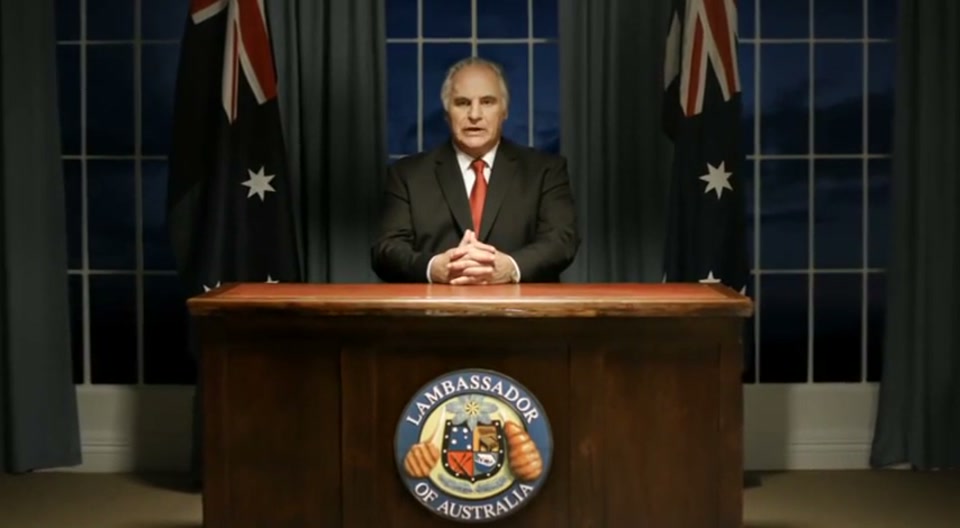
The early era trades on nostalgia. 2005’s Un-Australianism mourns the passing of simpler times and rubber thongs, and the Kekovich addresses treat foreign food, celebrity culture and political correctness as threats to an authentic, grounded Australia. The barbecue is a “fortress of authenticity,” and difference is the problem.
By the later corpus, difference is the answer. 2023’s Un-Australian has a community of exiles form a better society than the one that expelled them. The trajectory the sources describe runs from a singular, exclusionary identity toward a plural, self-aware one — a considerable ideological distance travelled across the corpus.
The sources are careful to preserve the tension rather than smoothing it into a clean progression. 2014’s Generation Lamb embodies it in a single scene: the advertisement includes a same-sex couple and simultaneously has Kekovich misgender one of its members — a progressive gesture and a traditional instinct in the same moment. The analysis also notes that the campaign has “serially abandoned earlier framings without acknowledging that they contradict later ones,” so the shift is real but never formally reconciled.
Whether this constitutes genuine ideological change or commercial adaptation to a shifting cultural market is a question the sources say the advertisements do not answer. The corpus also flags related unresolved matters — the campaign’s long anchoring to Australia Day, quietly loosened since the mid-2010s and touched only once directly, in 2019.
This theme gathers the strands running through the campaign’s contested identity, the ‘un-Australian’ paradox and its uneven history of inclusion and belonging — a record of movement whose destination the evidence declines to fix.
Advertisements (4)
- 2005 Un-Australianism
- 2013 Lambnesia
- 2014 Generation Lamb