Sam Kekovich UN Speech
2010In a parody of a major diplomatic address, former AFL player and "Lambassador" Sam Kekovich stands at a podium in a United Nations-style General Assembly. He declares that the world is facing a pandemic of "un-Australianism," which he defines as not eating enough lamb. Before an audience of international delegates, he proposes that eating lamb is the simple solution to complex global problems. Using a series of puns and cultural stereotypes, he suggests renaming "Turkey" and "Jerusalem" to "Jeru-SAL-em," and claims that lamb can unite Iraq and "Barak" (Obama), and resolve conflicts in the Middle East and Pakistan. He concludes by calling on the UN to declare January 26th "International Australia Day," a day for everyone in the world to eat lamb, comically paraphrasing John F. Kennedy by proclaiming "Ich bin ein barbecuer."
Watch the advertisement
Historical and topical context
Campaign year: 2010 Assumed or known release period: January 2010 Primary context year: 2009 Likely topical context window: July 2009 to January 2010 Confidence in those dates: High (Supported by ad industry archives listing the "UN Speech" ad as the 2010 campaign).
The ad was released into a world still grappling with the aftershocks of the 2008 Global Financial Crisis. While the 2009 Kekovich ad directly addressed the "credit crunch," this 2010 installment shifts focus to international relations, reflecting a world where economic anxiety was giving way to ongoing geopolitical complexities. In Australia, Kevin Rudd was Prime Minister, having been elected in late 2007.
The most significant topical references are:
Reference: Barack Obama ("Barak") Evidence in the ad: The pun, "What do Iraq and Barack have in common? A 'rack' in their name!" Likely relevance at release: Barack Obama's presidency was the dominant global story. In October 2009, just a few months before this ad's likely release, he was controversially awarded the Nobel Peace Prize. Kekovich's closing line, "That should just about get me the Nobel Peace Prize next year," is a clear satirical nod to this event, humorously comparing his "lamb diplomacy" to Obama's perceived (at the time, by some critics) lack of concrete achievements to warrant the prize. Confidence: High External verification needed: No
Reference: The Global Financial Crisis (GFC) and International Summits Evidence in the ad: The entire setting of a UN-style global assembly. Likely relevance at release: The GFC had led to a series of high-stakes international meetings (G20, etc.) throughout 2008 and 2009, where world leaders attempted to coordinate a global response. The ad's setting parodies the perceived self-importance and ultimate ineffectiveness of these grand summits, contrasting them with the simple, "common sense" Australian solution of a BBQ. Confidence: High External verification needed: No
Reference: Ongoing Middle East and South Asian Conflicts Evidence in the ad: Puns referencing Iraq, Jerusalem ("Jeru-SAL-em"), and Pakistan/Islamabad ("Is-lam-a-bad"). Likely relevance at release: These regions remained areas of significant global tension and news focus. The war in Iraq was ongoing, the Israeli-Palestinian peace process was stalled, and the security situation in Pakistan and Afghanistan was a major international concern. The ad's use of simplistic puns to "solve" these intractable conflicts was a satirical commentary on the distant and often superficial way such issues are digested by a domestic audience. Confidence: High External verification needed: No
Campaign meaning
Creative premise
The advertisement uses the creative premise of a satirical diplomatic speech. It places Sam Kekovich, acting as Australia's "Lambassador," on the world stage at a mock United Nations General Assembly to present a ridiculously simplistic and nationalistic solution—eating lamb—to complex global problems, thereby parodying both political rhetoric and Australian jingoism.
Message
Explicit message:
- You should eat lamb on Australia Day.
- Failing to eat lamb is "un-Australian."
- Lamb is the key to unity and what "truly unites us."
Strongly implied message:
- International diplomacy and political summits are largely pompous, ineffective, and disconnected from common sense.
- The true Australian identity is simple, practical, and centered on the social ritual of the barbecue ("mates over a lamb Barbie").
- Australia's straightforward, no-nonsense approach to life, as symbolised by lamb, is superior to the complicated and ultimately futile efforts of the rest of the world.
Tentative interpretation:
- The ad gently mocks the Australian tendency to view the world through a parochial lens, while simultaneously celebrating that exact worldview as a form of authentic, unpretentious wisdom.
Role of lamb
In this ad, lamb transcends being a product and becomes a powerful, multi-faceted symbol. It is:
- A Diplomatic Tool: Lamb is presented as the key to solving international conflicts and achieving world peace.
- A National Identifier: Consumption of lamb is equated with being "Australian," while not eating it is "un-Australian."
- A Social Unifier: It is the centerpiece of the "lamb Barbie," the ritual that brings "mates" together and is proposed as the foundation for global unity.
- The Comedic Device: The entire narrative and all major jokes (the puns on 'rack', 'Jerusalem', 'Islamabad') revolve around lamb.
Worldview evidence
Australian exceptionalism
Classification: Strongly implied Evidence: The core premise that the world's problems can be solved if everyone becomes "more Australian" by adopting the ritual of eating lamb. Meaning at release: A satirical take on the idea that the Australian way of life is a simple, superior model that the rest of the world would do well to emulate. It plays on a nationalistic self-perception, exaggerating it to a comedic extreme.
Anti-elitism / Anti-intellectualism
Classification: Strongly implied Evidence: The setting pits Kekovich's "simple" solution against the backdrop of the UN, a symbol of complex, elite global bureaucracy. His blunt, pun-filled speech is a deliberate contrast to formal diplomatic language. Meaning at release: The ad champions "common sense" and the wisdom of the common person (represented by the BBQ) over the perceived empty posturing of politicians, diplomats, and global institutions.
Irreverent humour
Classification: Explicit Evidence: The entire speech is built on puns and stereotypes about other nations and cultures ("Turkey," China, the Middle East). Meaning at release: The humour relies on a style of irreverence that intentionally skirts the edges of political correctness. It assumes an audience that understands the stereotypes are part of the joke and a parody of a certain kind of old-fashioned Australian bluntness, rather than a malicious attack.
Humour, tone and satire
- Tone: The tone is bombastic, satirical, and deliberately provocative, delivered with the deadpan seriousness of a genuine political address.
- Principal joke mechanisms:
- Puns: The humour relies heavily on puns that are both clever and cringeworthy ("Barack" / a rack, "Jeru-SAL-em", "Is-lam-a-bad", "Istanbul").
- Hyperbole: The central idea that eating lamb can bring about world peace is a massive exaggeration.
- Satire: The primary target of satire is the self-importance of international diplomacy and grand political rhetoric. It also satirises a specific brand of Australian nationalism by exaggerating it to absurd proportions.
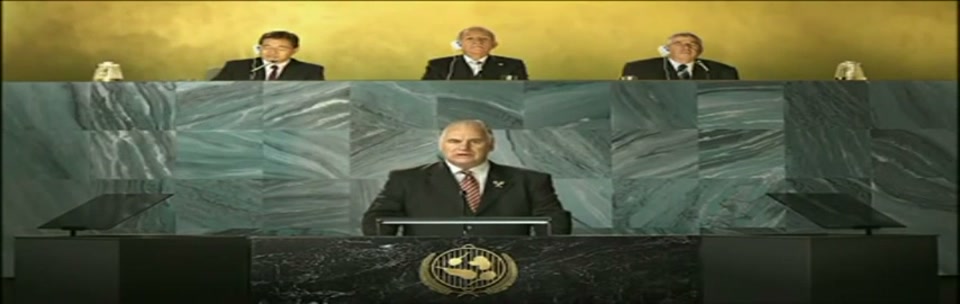
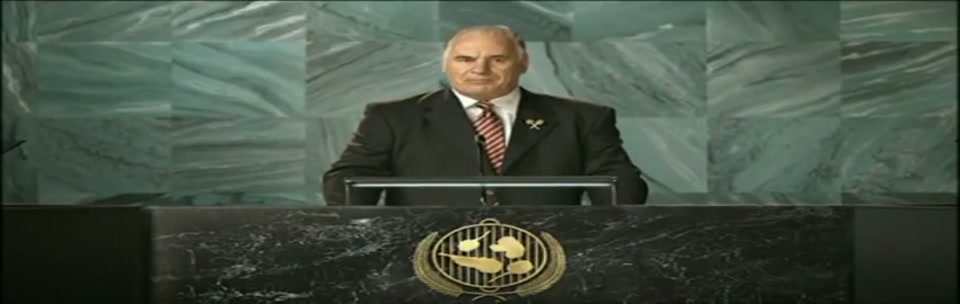
- Visual Gags: The BBQ-themed UN-style emblem is a key visual joke that underpins the entire premise.
- Targets of satire: The main targets are the United Nations, global summits, and the political process itself. It also affectionately parodies the stereotype of the blunt, politically incorrect, but "common sense" Australian. This is more affectionate parody than genuine criticism of Australian culture; the genuine criticism is reserved for the institutions of international power.
Campaign evidence summary
Core message
The world's complex political and social problems are no match for the simple, unifying power of Australian common sense, which is best expressed by all nations coming together to share lamb at a barbecue on an "International Australia Day."
Values supported by this ad
- National Pride (satirically exaggerated)
- Mateship and social unity
- Simplicity and common sense over intellectualism and bureaucracy
- Irreverence and a larrikin sense of humour
Role of lamb
Lamb is positioned as a panacea for global ills. It is not merely a food but a symbol of Australian identity, a catalyst for social bonding, and the single tool necessary for achieving world peace and unity.
Most important topical or historical elements
- The global prominence of US President Barack Obama and his 2009 Nobel Peace Prize win.
- The backdrop of ongoing international summits (G20, etc.) attempting to deal with the fallout of the GFC.
- Ongoing geopolitical tensions in the Middle East (Iraq, Israel-Palestine) and South Asia (Pakistan).
Uncertainties
- While the general reference to misbehaving rugby league teams in New Zealand is clear, it is not certain if it connects to a specific, high-profile incident from 2009 or is a more general cultural reference.
Themes and connections
This advertisement belongs to Era 1 — The Kekovich Doctrine.
Keyframe gallery
10 representative frames, in chronological order.
-

00:01 · opening The ad opens with a swirling, hypnotic black-and-white pattern. This morphs into the colourful logo of the "Australia Council," which depicts the continent made of flowing, multi-coloured ribbons. -

00:03 · opening The ad opens with a swirling, hypnotic black-and-white pattern. This morphs into the colourful logo of the "Australia Council," which depicts the continent made of flowing, multi-coloured ribbons. -
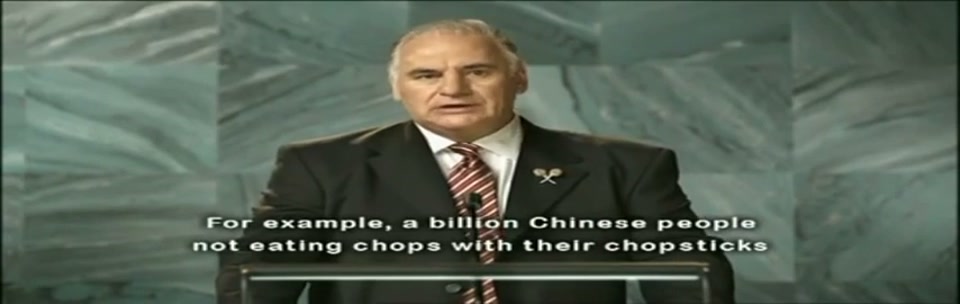
00:18 · food shot The main speaker, Sam Kekovich, is at a large podium addressing the assembly. The podium and the wall behind him feature a modified seal that looks like the UN emblem, but the olive branches are replaced with barbecue… -
00:26 · food shot Kekovich continues his speech, looking directly at the camera. The camera cuts to two men in African traditional dress and then to a man and woman under a "TURKEY" placard, who look on with stern, unamused expressions. -
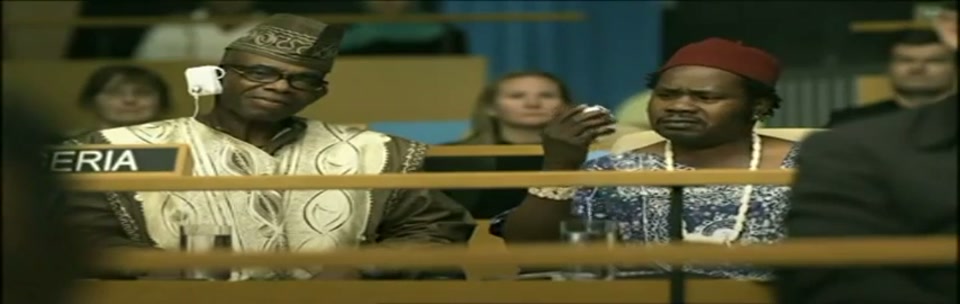
00:30 · food shot Kekovich continues his speech, looking directly at the camera. The camera cuts to two men in African traditional dress and then to a man and woman under a "TURKEY" placard, who look on with stern, unamused expressions. -
00:33 · food shot Kekovich continues his speech, looking directly at the camera. The camera cuts to two men in African traditional dress and then to a man and woman under a "TURKEY" placard, who look on with stern, unamused expressions. -

00:55 · food shot Kekovich becomes more animated, gesturing as he presents his solution. The camera remains focused on him at the podium, with the BBQ-themed seal prominent. -

01:07 · food shot Kekovich's speech reaches its crescendo. The music swells with patriotic fervor. He speaks with utmost seriousness, as if expecting a Nobel Prize. -
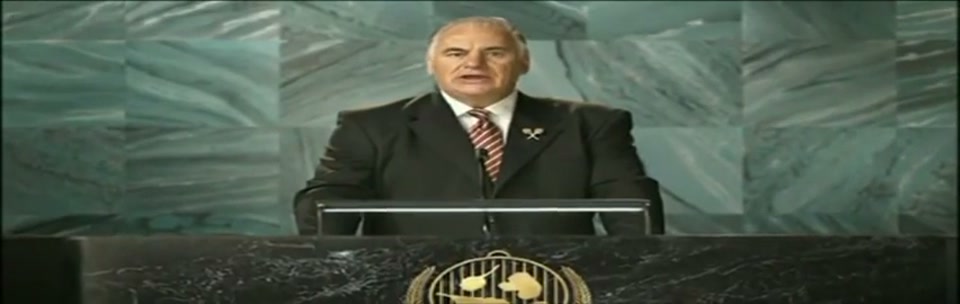
01:13 · food shot Kekovich's speech reaches its crescendo. The music swells with patriotic fervor. He speaks with utmost seriousness, as if expecting a Nobel Prize. -
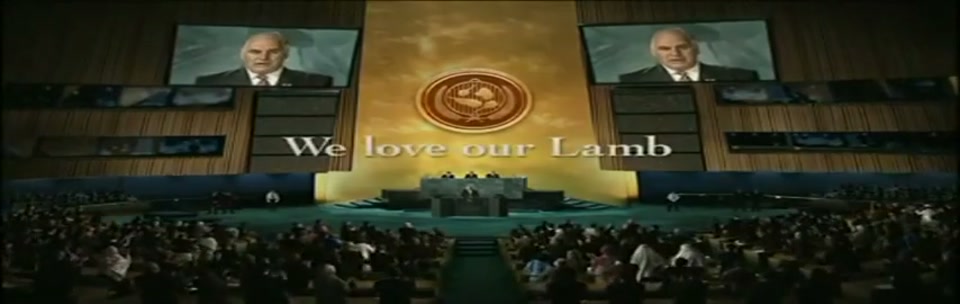
01:30 · brand frame Kekovich concludes his speech. The screen fades to black with the campaign slogan and his sign-off.
Scene-by-scene account
Show full scene breakdown
00:00–00:05
Visuals The ad opens with a swirling, hypnotic black-and-white pattern. This morphs into the colourful logo of the "Australia Council," which depicts the continent made of flowing, multi-coloured ribbons. This logo then transitions via a pinwheel effect into a wide shot of a large, formal assembly hall resembling the United Nations General Assembly.
Dialogue and audio Uptempo, slightly dramatic orchestral music plays.
On-screen text The logo text reads "australia council" in a serif font.
Meaning and context Directly observable: A graphic transition links an Australian cultural logo to a setting of international politics. Likely interpretation at release: The opening establishes a grand, almost self-important tone, setting up the satire to follow. The use of an official-looking logo and the UN setting creates a sense of gravitas that the speech will immediately puncture.
00:05–00:23
Visuals The main speaker, Sam Kekovich, is at a large podium addressing the assembly. The podium and the wall behind him feature a modified seal that looks like the UN emblem, but the olive branches are replaced with barbecue tongs, and the world map is replaced with a barbecue grill holding lamb chops. He is a middle-aged white man in a dark suit, delivering the speech with stern conviction. The camera cuts to show delegates in the audience, including a group under a "CHINA" placard who listen through earpieces. One smiles and gestures approvingly.
Dialogue and audio Kekovich: "My fellow Australians, and the rest of you. Mankind is facing a pandemic that threatens its very existence: un-Australianism. As a planet, we're not eating enough lamb. For example, a billion Chinese people are not eating chops with their chopsticks." [A Mandarin voice-over translates his words, which seems to amuse the Chinese delegate.]
On-screen text Desk placard: "CHINA"
Meaning and context Directly observable: Kekovich frames not eating lamb as a global crisis called "un-Australianism." He uses China as his first example. The official-looking UN seal is a visual gag, replaced with a BBQ theme. Likely interpretation at release: This sets up the core joke: a comically absurd, jingoistic worldview where Australian customs are the global standard. "Un-Australian" is a genuine, often politically charged term in Australian discourse, and using it to mean "not eating lamb" is satirical. The visual gag of the "BBQ seal" reinforces this conflation of national identity with a barbecue. The reaction of the Chinese delegate suggests the message is being received with amusement rather than offence, framing the speech as charmingly ridiculous.
00:23–00:37
Visuals Kekovich continues his speech, looking directly at the camera. The camera cuts to two men in African traditional dress and then to a man and woman under a "TURKEY" placard, who look on with stern, unamused expressions.
Dialogue and audio Kekovich: "Consequently, un-Australian behaviour is rife worldwide. In my own region, rugby league teams touring New Zealand would do a lot better if they shared lamb cutlets in their hotel rooms, instead of what's on-offer at the pub. And why can't English speakers pronounce 'Türkiye' properly? Fancy calling a proud nation 'Turkey'. What a load of Istanbul!"
On-screen text Desk placard: "TURKEY"
Meaning and context Directly observable: Kekovich lists more examples of "un-Australian" behaviour, referencing a trans-Tasman sporting rivalry and the pronunciation of the country Turkey. The delegates from "Turkey" appear unimpressed by the pun. Likely interpretation at release: The reference to rugby league teams in New Zealand is a nod to the frequent and well-publicised misbehaviour of touring Australian sports teams, a recurring source of minor scandal. The "Turkey/Istanbul" joke is a simple pun. The contrast between the laughing Chinese delegates and the stern Turkish delegates creates a rhythm for the jokes; some land, some don't. Verification needed: Check for specific rugby league incidents in New Zealand during the 2009 context year that might make this reference more topical.
00:37–01:01
Visuals Kekovich becomes more animated, gesturing as he presents his solution. The camera remains focused on him at the podium, with the BBQ-themed seal prominent.
Dialogue and audio Kekovich: "People of the world, it's time to focus on what truly unites us: lamb. What do Iraq and Barack have in common? A 'rack' in their name! Is there anyone in the Middle East who doesn't love a lamb feast? We could revive peace talks and bring everyone back to the table by renaming the holy city 'Jeru-SAL-em'. And as anyone that's had a curry in Pakistan knows, 'Is-lam-a-bad'? Of course it bloody well isn't!"
Meaning and context Directly observable: Kekovich explicitly proposes lamb as the key to world peace. He makes a series of puns based on the word "lamb" and related terms, connecting them to major geopolitical figures and conflict zones: Iraq, Barack Obama, Jerusalem, and Islamabad/Pakistan. Likely interpretation at release: These are the ad's most audacious and topical jokes. "Barack" is a clear reference to Barack Obama, who was a dominant global figure in 2009. The puns are deliberately groan-inducing and politically simplistic, satirising how complex international issues are often discussed in simplistic, black-and-white terms at home. The rapid-fire delivery of solutions to the Iraq War, the Israel-Palestine conflict, and tensions in Pakistan via bad puns is the comedic peak of the speech's absurdity.
01:01–01:25
Visuals Kekovich's speech reaches its crescendo. The music swells with patriotic fervor. He speaks with utmost seriousness, as if expecting a Nobel Prize.
Dialogue and audio Kekovich: "So the message is clear: our world would be a better place if we were all more Australian. If we all came together as mates over a lamb Barbie, just like we do down under. Which is why I'm asking the United Nations to declare January the 26th 'International Australia Day'. A day when every citizen of the world throws some chops on the grill and proudly proclaims, 'Ich bin ein barbecuer!'" [Slight pause for effect] "That should just about get me the Nobel Peace Prize next year."
Meaning and context Directly observable: He formally proposes making Australia Day an international holiday centered on eating lamb and directly states his ambition for a Nobel Peace Prize. Likely interpretation at release: This section parodies grand, JFK-style political rhetoric. The line "Ich bin ein barbecuer" is a direct, silly parody of Kennedy's famous "Ich bin ein Berliner" speech. The call to make Australia Day (a day of significant and complex debate within Australia itself) an international celebration is the height of the ad's satirical arrogance. The reference to the Nobel Prize is likely a nod to Barack Obama having been awarded the prize in October 2009, which was seen by some critics as premature.
01:25–01:32
Visuals Kekovich concludes his speech. The screen fades to black with the campaign slogan and his sign-off.
Dialogue and audio Kekovich: "So don't be un-Australian. Eat lamb on International Australia Day. You know it makes sense. I'm Sam Kekovich." Announcer (voiceover): [We love our lamb.] (This part is from other ads, but the on-screen text appears).
On-screen text "We love our Lamb" "Authorised by S. Kekovich"
Meaning and context Directly observable: The ad ends with a clear call to action and brand slogan. Strongly implied message: The final, explicit instruction grounds the entire satirical flight of fancy in its actual purpose: a commercial imperative to buy and eat lamb on Australia Day. The "Authorised by" text is a final parody of political advertising conventions.
Verification and uncertainties
- The master analysis flags some place-name puns in this ad (e.g. on Middle Eastern cities) as sensitive in retrospect; the Lamb Brain treats them as deprecated executions.
- Campaign Year: Verified as the 2010 campaign, based on advertising industry archives.
- Uncertain dialogue: The TXT transcript provided in the prompt was error-ridden. Dialogue has been corrected based on the video's audio track. Key corrections include:
- "un Australian ISM" -> "un-Australianism"
- "Jerusalem" -> "Jeru-SAL-em" (to reflect the pun)
- "is lamb a bad" -> "Is-lam-a-bad" (to reflect the pun)
- "ish Spin and barbecuer" -> "Ich bin ein barbecuer"
- Uncertain identities or references: The reference to "Barak" is confidently identified as Barack Obama.
- Topical claims needing release-period research: The connection between Kekovich's mention of the Nobel Peace Prize and Barack Obama's win in October 2009 has been established. The general context of the GFC and subsequent world leader summits has also been confirmed.