Address to the United Nations of Australia
2011In a parody of a major political address, Australian lamb advocate Sam Kekovich travels across Europe, delivering a bombastic speech to an unseen global audience. Standing before iconic European landmarks, he diagnoses the continent's problems—from volcanic eruptions and economic turmoil to questionable cuisine—as a creeping "plague of un-Australianism." He satirically critiques various nations for straying from their "lamb heritage." The solution he proposes is for Europe, and the world, to adopt Australia's key cultural ritual: celebrating "International Australia Day" on January 26th by eating lamb. The speech culminates in a parody of Winston Churchill's "We shall fight on the beaches" speech, repurposed to describe a commitment to barbecuing.
Watch the advertisement
Historical and topical context
Campaign year: 2011 Assumed or known release period: January 2011 Primary context year: 2010 Likely topical context window: July 2010 to January 2011 Confidence in those dates: High
The ad was released in January 2011, and its humour is heavily reliant on a series of major news events and cultural moments from 2010, suggesting the creative was developed in the latter half of that year. The national mood in Australia was influenced by a period of political uncertainty following the federal election.
Reference: The 2010 Eyjafjallajökull volcano eruption in Iceland. Evidence in the ad: News footage and ticker at 00:06. Kekovich's line about a volcano with "an unpronounceable name." Likely relevance at release: This was a massive global news story in April-May 2010, causing unprecedented disruption to European travel. The reference would have been immediately understood by the audience. Confidence: High External verification needed: No
Reference: 2010 Pakistan Cricket spot-fixing scandal. Evidence in the ad: Line about "spread-betting through a subcontinent cricket team" at 00:14. Likely relevance at release: A major scandal broke in August 2010 involving Pakistani players taking bribes to underperform at specific moments (spot-fixing). This was front-page news in Australia, a cricket-obsessed nation. Confidence: High External verification needed: No
Reference: Mel Gibson's 2010 controversy. Evidence in the ad: Line about "as much success as Mel Gibson getting a date" at 00:19. Likely relevance at release: In July 2010, recordings of Gibson making abusive and racist statements were leaked, causing a massive public scandal and severely damaging his career. The joke refers to his resulting pariah status. Confidence: High External verification needed: No
Reference: 2010 Deepwater Horizon (BP) oil spill. Evidence in the ad: Line about "the BP chairman asking for a bonus" at 00:21. Likely relevance at release: The catastrophic oil spill in the Gulf of Mexico was a dominant global news story from April to July 2010. Public anger was directed at BP and its then-CEO Tony Hayward. Confidence: High External verification needed: No
Reference: 2010 Australian Federal Election. Evidence in the ad: Line about it taking a long time "to work out who was running Australia" at 00:41. Likely relevance at release: The August 21, 2010, election resulted in a hung parliament. The ensuing 17 days of intense negotiations between the major parties and independent MPs to form a government was a period of significant national political drama. Confidence: High External verification needed: No
Reference: 2010 Australia's Next Top Model finale. Evidence in the ad: Line about it taking a long time to "find out the winner of Australia's Next Top Model" at 00:44. Likely relevance at release: On September 28, 2010, the host of the popular reality show mistakenly announced the wrong winner during the live finale. The embarrassing gaffe became a major media talking point and was widely mocked. Confidence: High External verification needed: No
Campaign meaning
Creative premise
The ad is a satirical "address to the world" that frames contemporary European problems and recent global crises through a uniquely Australian lens. It posits that these issues are symptoms of a moral and cultural decay called "un-Australianism," and that the simple, patriotic act of eating lamb on Australia Day is the universal cure. The humour is driven by the absurd mismatch between the gravity of the problems and the simplicity of the proposed solution.
Message
Explicit message:
- "Don't be un-Australian. Eat lamb on International Australia Day." (01:20)
- The world should join Australia in celebrating Australia Day on January 26th with a lamb barbecue to solve its problems. (01:00)
Strongly implied message:
- Australian culture, with its emphasis on simple pleasures like a barbecue, is presented as a common-sense antidote to the complex, self-inflicted problems of "older" and more decadent cultures.
- Patriotism is best expressed not through complex politics but through simple, unifying rituals.
- Australia's perceived cultural isolation is reframed as a source of strength and clarity.
Tentative interpretation:
- The ad playfully mocks both Australian jingoism and cultural cringe. By exaggerating Australia's global importance to an absurd degree, it simultaneously celebrates and satirises a certain type of national pride.
Role of lamb
Lamb functions as the central symbol of Australian identity and virtue. It is:
- A patriotic sacrament: Eating lamb on Australia Day is framed as the ultimate act of being "Australian."
- A cultural cure-all: It is the solution to Europe's economic woes, cultural confusion, and political disunity.
- A source of puns: The ad uses "lamb" as a prefix for famous Italian brands (Lambretta, Lamborghini) to humorously reinforce its central importance.
- A plot device: The betrayal of a "lamb heritage" is the cause of Europe's downfall, and its re-embrace is the path to salvation.
Worldview evidence
Patriotism is a simple, food-based ritual
Classification: Explicit Evidence: The entire premise of the ad, culminating in the lines "join Australia in throwing some lamb on the barbie and celebrating International Australia Day on January 26th." (01:00) Meaning at release: The ad continues the campaign's long-running theme of codifying the Australia Day barbecue as a core national duty, simplifying patriotism into a single, accessible action.
The world is divided into "Australian" and "un-Australian"
Classification: Strongly implied Evidence: The term "un-Australianism" is used repeatedly to describe a host of foreign problems (00:12, 01:08). Kekovich's final plea is "Don't be un-Australian" (01:20). Meaning at release: The ad establishes a clear, satirical binary. "Australian" represents common sense, simplicity, and lamb. "Un-Australian" represents everything else: foreign food, political complexity, economic failure, and volcanic eruptions.
Mocking reverence for tradition and authority
Classification: Strongly implied Evidence: Parody of Shakespeare (00:00), Winston Churchill (01:08), and the format of a solemn political address. Meaning at release: The ad humorously debunks figures and formats associated with high culture and serious history, replacing their gravitas with the mundane concerns of a barbecue. This suggests a worldview that is skeptical of pomposity and authority.
Satirical Australian exceptionalism
Classification: Strongly implied Evidence: The creative premise of Australia lecturing Europe on how to fix its problems. Meaning at release: The ad presents a deeply ironic version of Australian exceptionalism. While on the surface it claims Australia has the answers, the absurdity of the "lamb" solution ensures the tone is self-deprecating. It celebrates national identity by poking fun at the very idea of national superiority.
Humour, tone and satire
- Tone: The tone is bombastic, mock-heroic, and deeply satirical. It mimics the gravitas of a world-changing speech while consistently undercutting it with bathos and Australian vernacular.
- Principal joke mechanisms:
- Topical References: The ad is saturated with very specific news events from 2010, creating a sense of immediate relevance.
- Parody: It directly parodies the language of Shakespeare and Winston Churchill.
- Puns and Wordplay: Extensive use of puns (Cretans/cretins, Brussels/sprout, Lamb-borghini, donkey vote).
- Stereotypes: Relies on broad, cartoonish stereotypes of European nations (French frog-eaters, Dutch cannabis cafes).
- Satirical Contrast: The core humour comes from the contrast between the scale of the "problems" (global economic crisis) and the simplicity of the "solution" (a barbecue).
- Targets of satire:
- Europe: Its perceived decadence, complexity, and strange customs are the primary butt of the jokes.
- Australian Jingoism: The ad affectionately satirises a certain kind of chest-beating national pride by taking it to its logical, absurd conclusion.
- Media and Politics: Specific failures in politics (the hung parliament) and media (the Top Model finale) are mocked as evidence of a wider malaise.
Campaign evidence summary
Core message
The ad explicitly argues that to be a true Australian, one must eat lamb on Australia Day. It satirically extends this message to the global stage, proposing that the world's problems are a form of "un-Australianism" that can only be solved if everyone adopts the Australian ritual of a lamb barbecue on January 26th.
Values supported by this ad
- Ritualistic patriotism
- The superiority of simple "common sense" over complex intellectualism
- A skeptical stance towards authority and tradition
- Humorous self-deprecation as a form of national pride
Role of lamb
Lamb is the sacred symbol of Australian identity. It is a patriotic duty, a social unifier, and the literal and metaphorical "cure" for the problems of a world that has lost its way.
Most important topical or historical elements
The ad is a time capsule of late 2010, with explicit references to the Australian federal election, the Australia's Next Top Model finale gaffe, the BP oil spill, the Pakistani cricket scandal, Mel Gibson's public implosion, and the Icelandic volcano eruption.
Uncertainties
The identities of background figures are unknown. The penguin in the London scene is an unexplained visual joke with no clear topical reference.
Themes and connections
This advertisement belongs to Era 1 — The Kekovich Doctrine.
Keyframe gallery
17 representative frames, in chronological order.
-
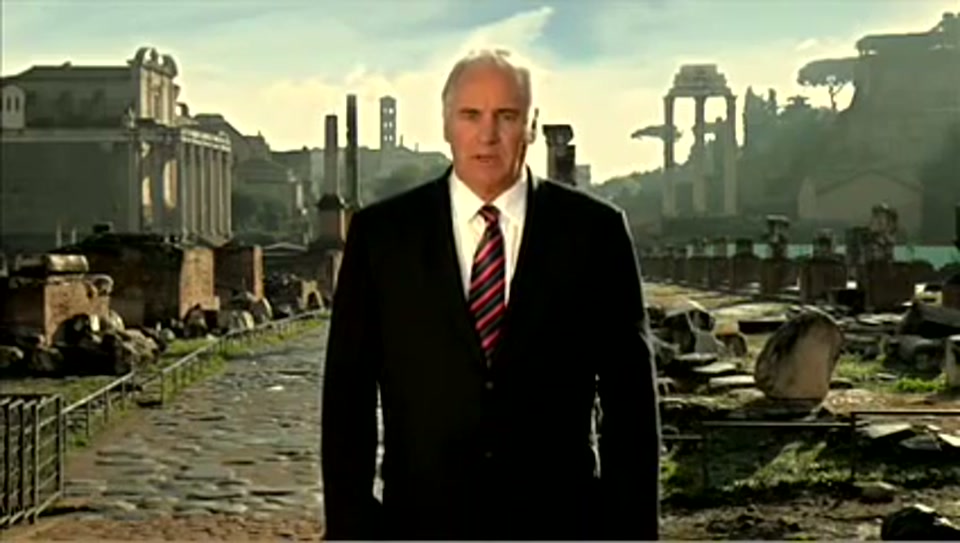
00:03 · opening The ad opens on Sam Kekovich, dressed in a dark suit and tie, standing in the middle of the Roman Forum. The lighting is dramatic, suggesting an important historical moment. -
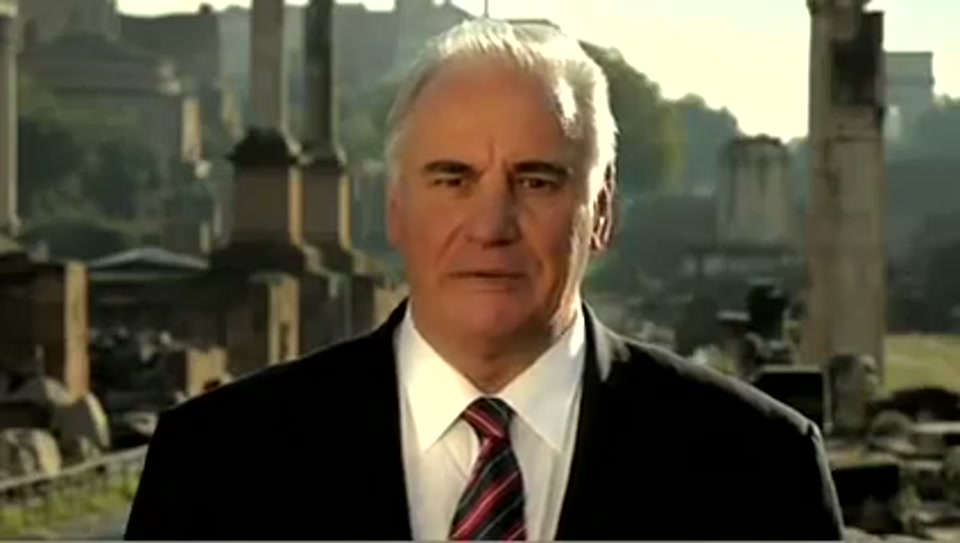
00:06 · opening The ad opens on Sam Kekovich, dressed in a dark suit and tie, standing in the middle of the Roman Forum. The lighting is dramatic, suggesting an important historical moment. -
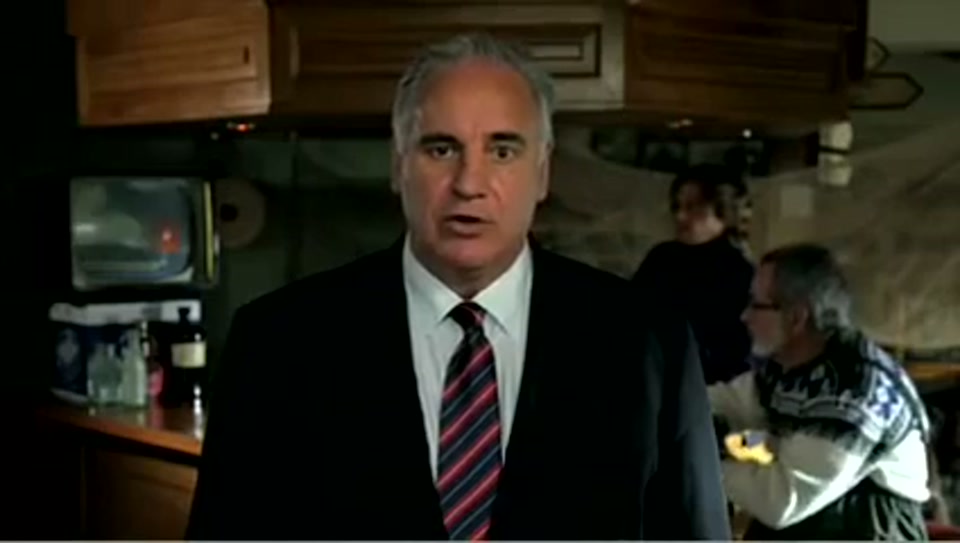
00:09 · opening The ad opens on Sam Kekovich, dressed in a dark suit and tie, standing in the middle of the Roman Forum. The lighting is dramatic, suggesting an important historical moment. -
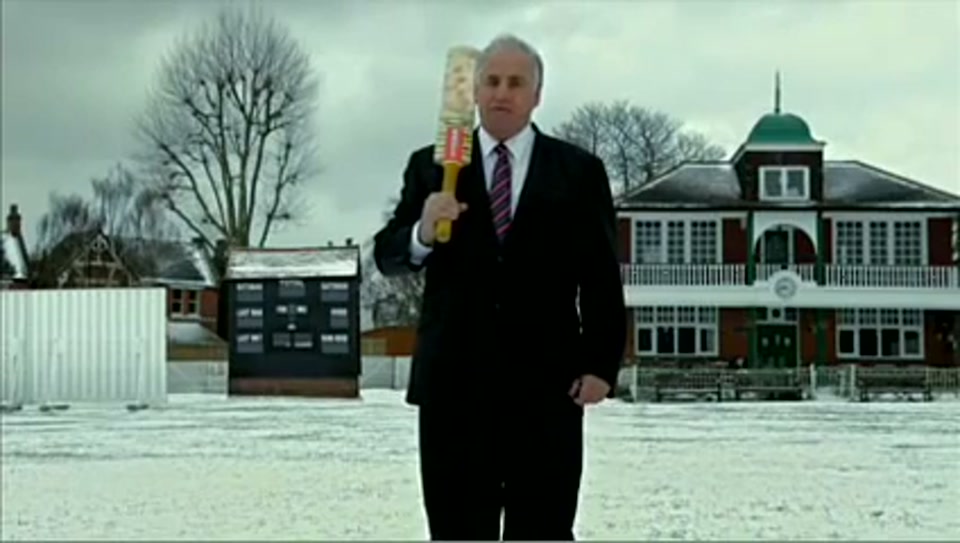
00:14 · food shot Kekovich stands in a snow-covered English cricket ground, a traditional pavilion in the background. He holds an inflatable cricket bat. -
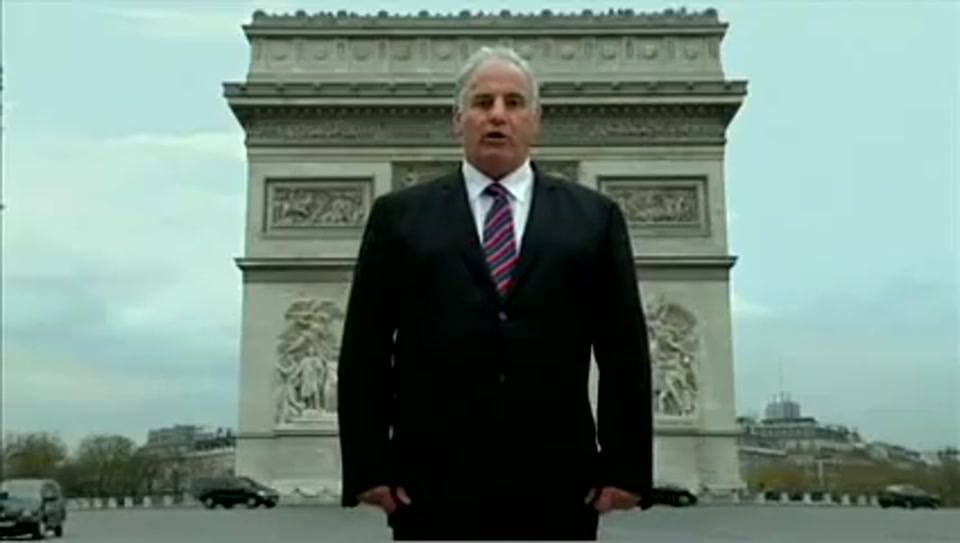
00:17 · food shot Kekovich stands in a snow-covered English cricket ground, a traditional pavilion in the background. He holds an inflatable cricket bat. -
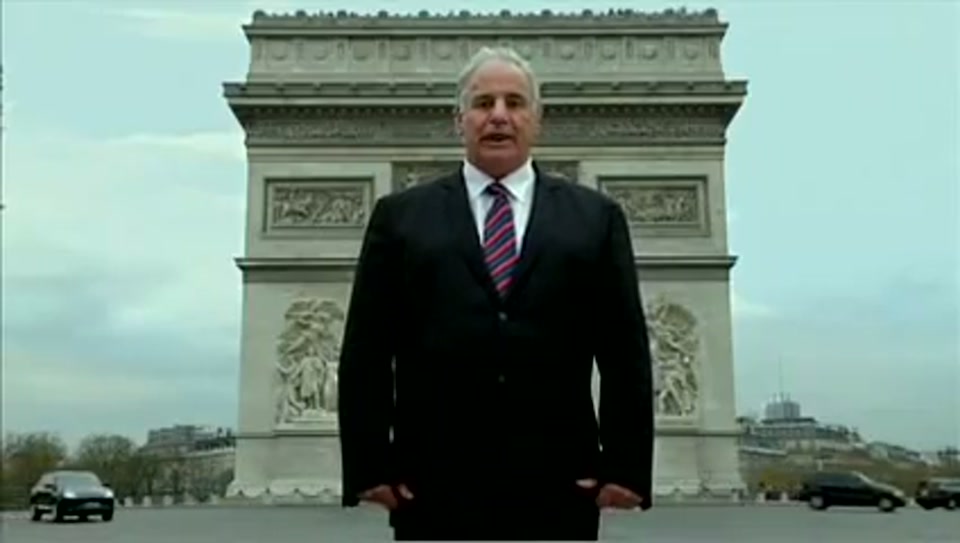
00:20 · food shot Kekovich stands in a snow-covered English cricket ground, a traditional pavilion in the background. He holds an inflatable cricket bat. -
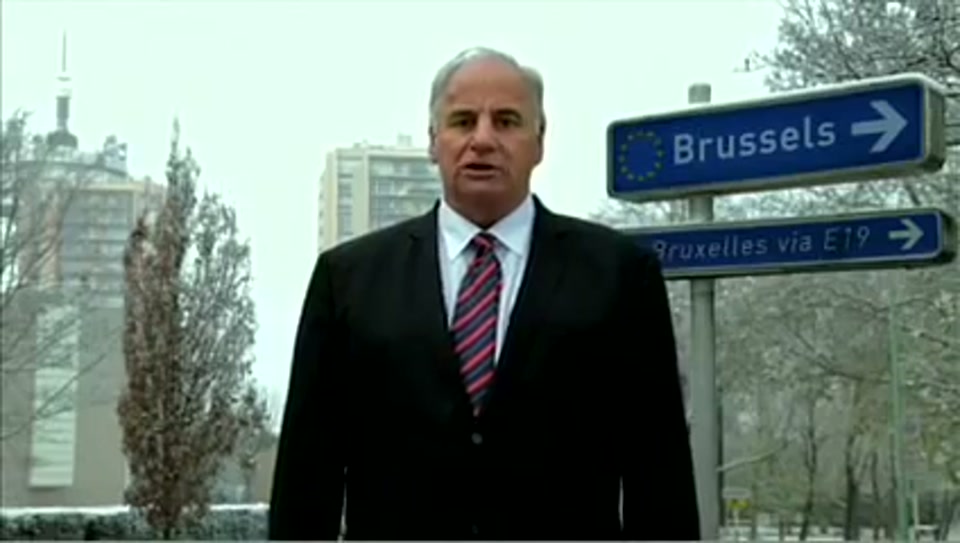
00:26 · standard Kekovich stands on a snowy street with a sign pointing towards "Brussels." He then appears in front of the Eiffel Tower, holding up a tiny pair of cooked frog's legs. -
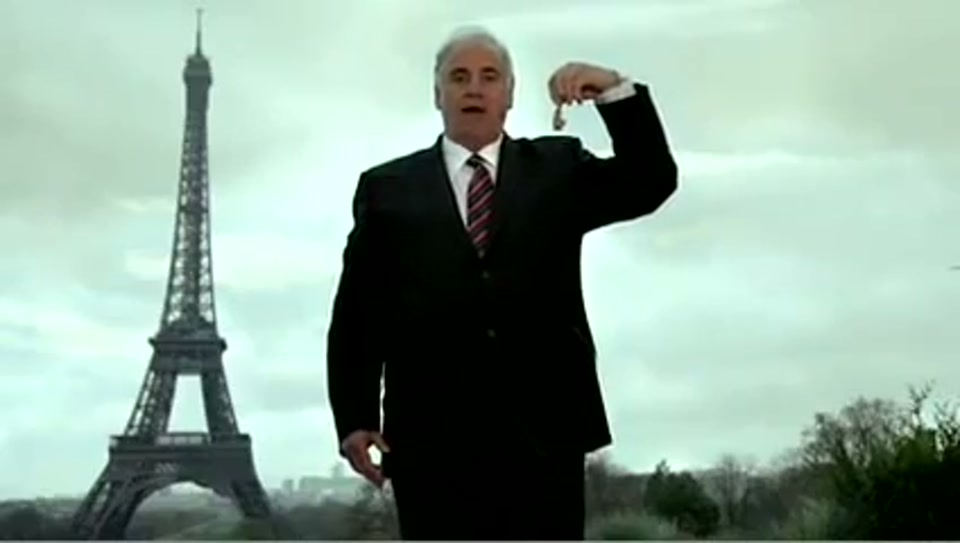
00:30 · standard Kekovich stands on a snowy street with a sign pointing towards "Brussels." He then appears in front of the Eiffel Tower, holding up a tiny pair of cooked frog's legs. -
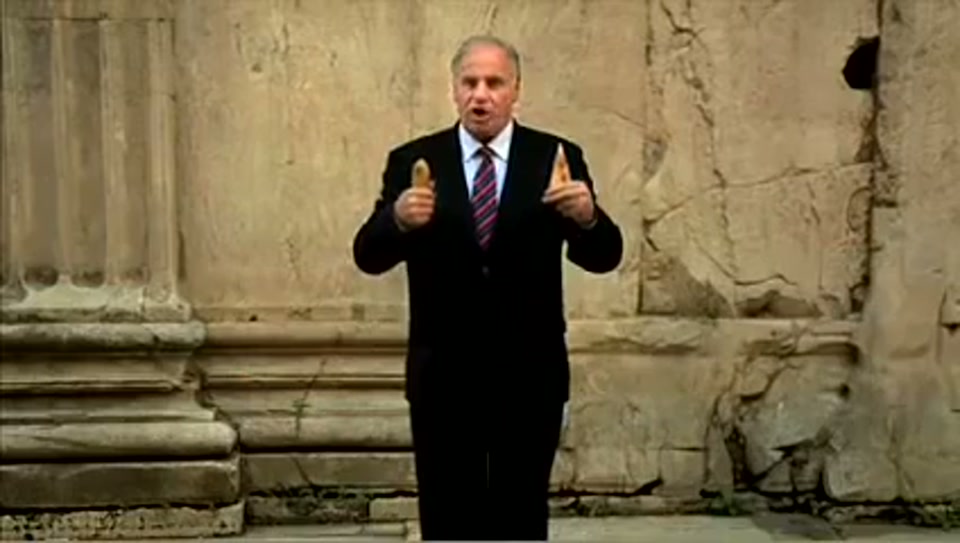
00:34 · standard Kekovich stands on a snowy street with a sign pointing towards "Brussels." He then appears in front of the Eiffel Tower, holding up a tiny pair of cooked frog's legs. -
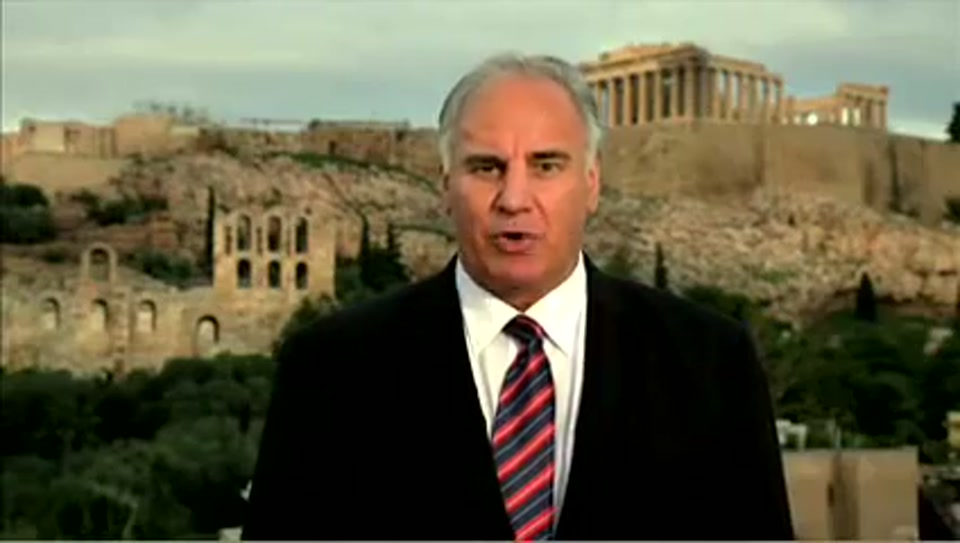
00:44 · food shot Kekovich stands before the Acropolis in Athens. The shot cuts to an extreme close-up of his face, then to a visual joke where he is seen riding a donkey along a beach, led by a local man. -
00:47 · food shot Kekovich stands before the Acropolis in Athens. The shot cuts to an extreme close-up of his face, then to a visual joke where he is seen riding a donkey along a beach, led by a local man. -
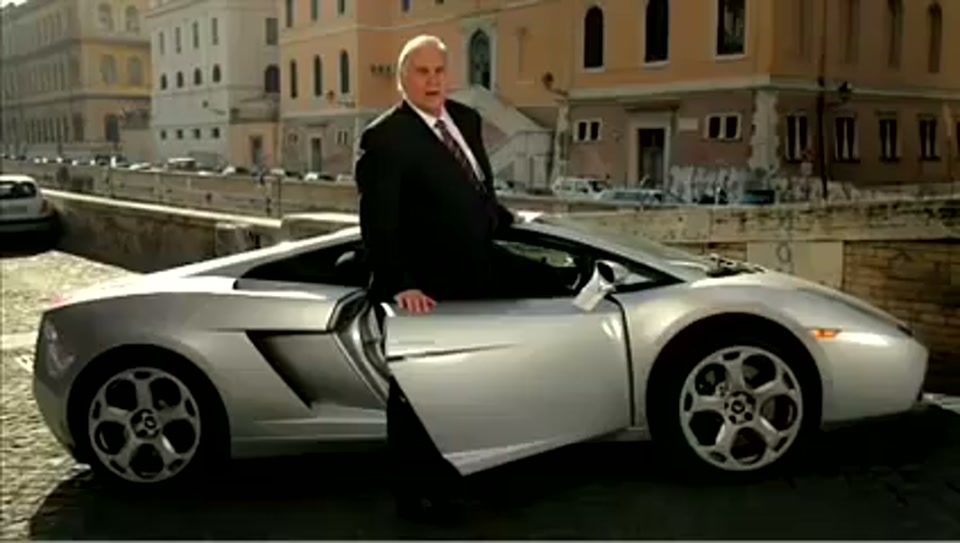
00:53 · standard Kekovich stands on the Spanish Steps in Rome. A montage follows: he poses with an attractive woman on a Lambretta scooter, is served Lambrusco wine in a restaurant, and sits in a silver Lamborghini. -
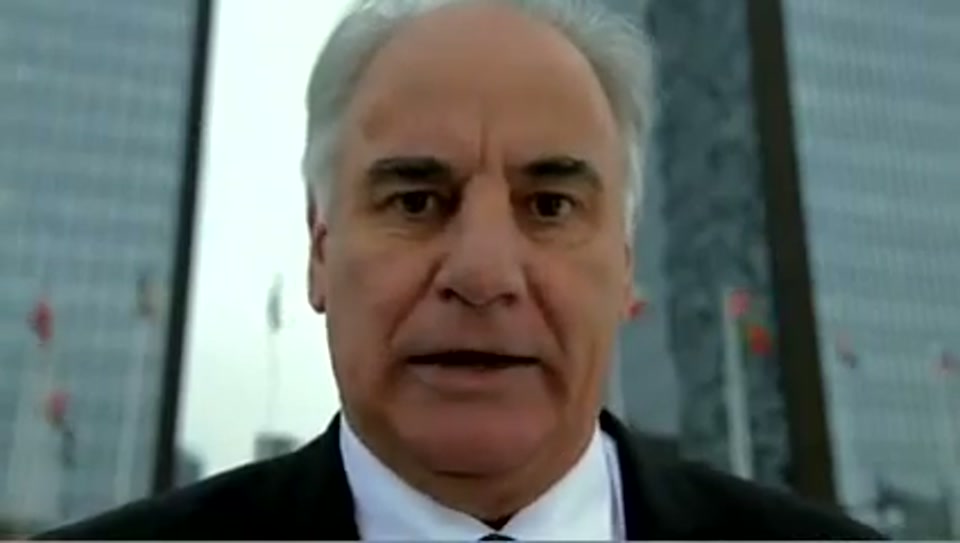
00:57 · standard Kekovich stands on the Spanish Steps in Rome. A montage follows: he poses with an attractive woman on a Lambretta scooter, is served Lambrusco wine in a restaurant, and sits in a silver Lamborghini. -
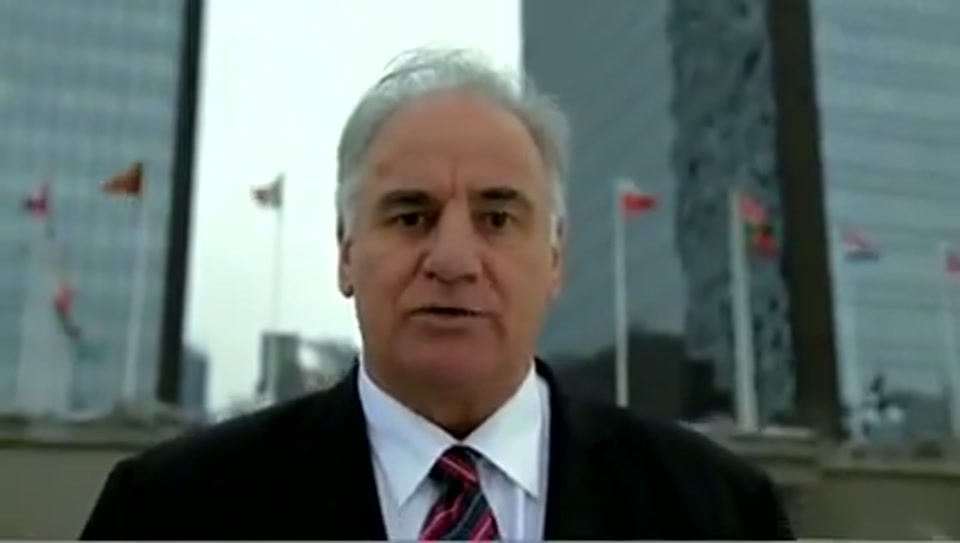
01:01 · standard Kekovich stands on the Spanish Steps in Rome. A montage follows: he poses with an attractive woman on a Lambretta scooter, is served Lambrusco wine in a restaurant, and sits in a silver Lamborghini. -
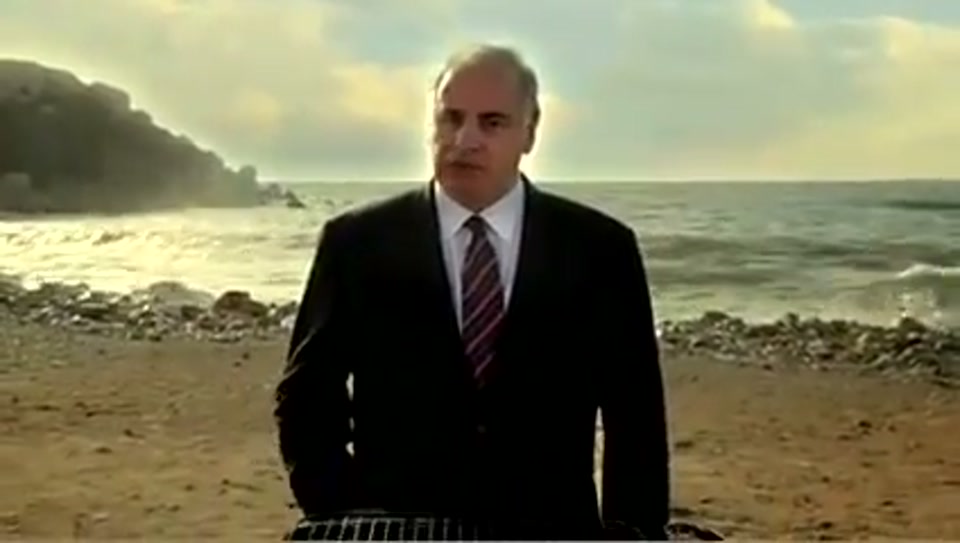
01:12 · food shot Kekovich stands on a dramatic, windswept beach. A barbecue grill (a Weber kettle) is set alight on the beach. -
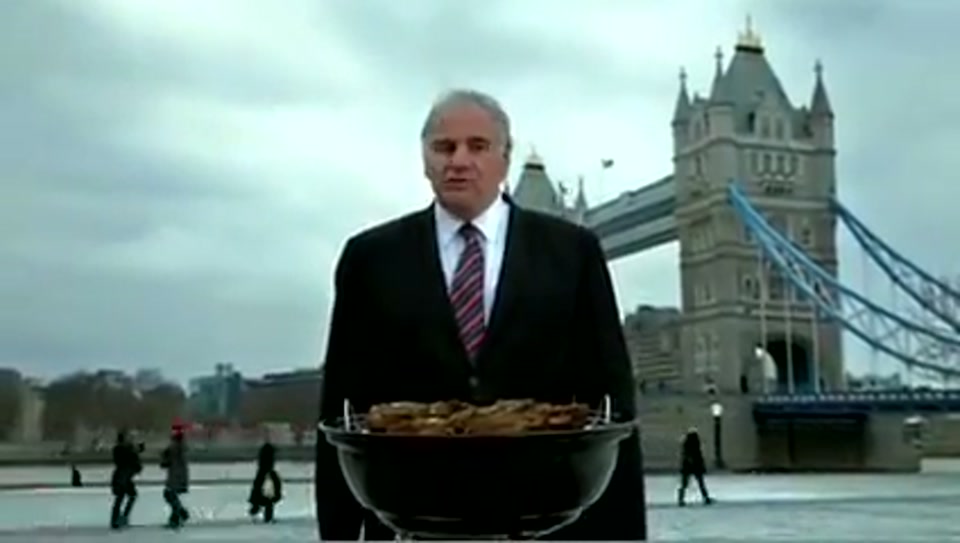
01:15 · food shot Kekovich stands on a dramatic, windswept beach. A barbecue grill (a Weber kettle) is set alight on the beach. -
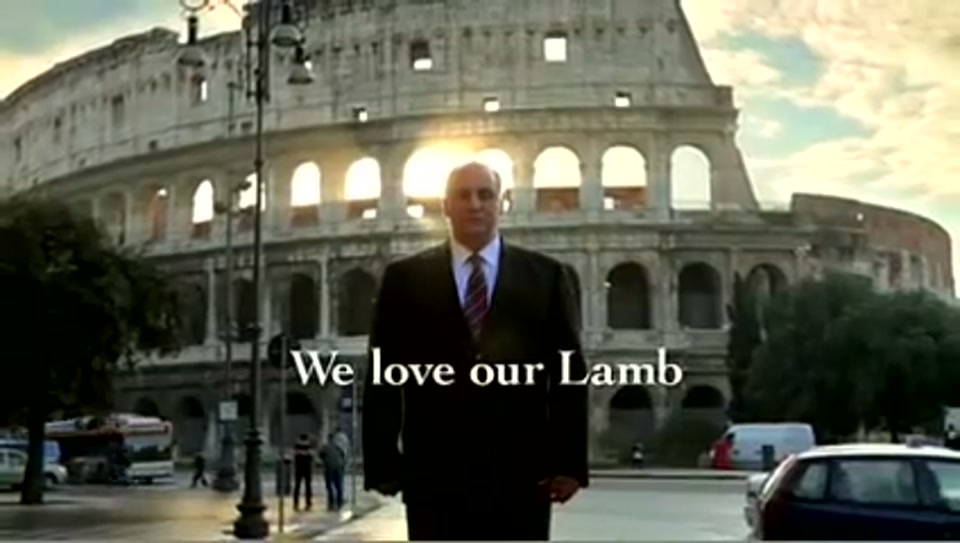
01:27 · brand frame Kekovich stands before the Colosseum in Rome, the sun flaring behind it. He delivers his final lines directly to the camera with utmost seriousness.
Scene-by-scene account
Show full scene breakdown
00:00 - 00:12
Visuals The ad opens on Sam Kekovich, dressed in a dark suit and tie, standing in the middle of the Roman Forum. The lighting is dramatic, suggesting an important historical moment. The camera zooms in on his serious, determined face. The scene cuts to a vintage television set in a dimly lit room, showing news footage of a volcanic eruption. It then cuts back to Kekovich in a different, nondescript indoor setting.
Dialogue and audio Speaker (Sam Kekovich): “Friends, Bogans, Countrymen, put down your beers. Europe is under threat. This time, it's not the volcano that, like any typical European, has an unpronounceable name and smokes too much. It's an Australianism.” [TXT says: “friends bogens countrymen...” and “it's not the volcano that like any... has an unpronouncable name and smokes too much it's an Australian ISM”] The opening line is a parody of "Friends, Romans, Countrymen" from Shakespeare's Julius Caesar. "Bogans" is an Australian slang term for a person whose speech, clothing, attitude and behaviour are considered unrefined or unsophisticated.
On-screen text
On the television screen, a news ticker is visible beneath footage of the volcano. The text reads:
Eyjafjallajökull - Volcano
Iceland Travel Chaos
Meaning and context Directly observable: Kekovich frames a threat to Europe in grandiose terms, immediately subverting it with Australian slang. He explicitly links the threat to "un-Australianism" and dismisses a recent major news event (a volcanic eruption) as a minor issue by comparison. Likely interpretation at release: The opening joke immediately sets the satirical tone, replacing the noble "Romans" with the colloquial "Bogans." The reference to the Eyjafjallajökull volcano, which caused massive air travel disruption across Europe in April-May 2010, was a highly topical reference. The joke about it smoking too much and having an unpronounceable name plays on stereotypes of both volcanoes and Europeans. Verification needed: The exact text on the TV news ticker. Who is in the background of the indoor scene at 00:08?
00:12 - 00:23
Visuals Kekovich stands in a snow-covered English cricket ground, a traditional pavilion in the background. He holds an inflatable cricket bat. The scene cuts to him in front of the Arc de Triomphe in Paris, then to a close-up of his face.
Dialogue and audio Speaker (Sam Kekovich): “It's sweeping through the continent faster than spread-betting through a subcontinent cricket team. Which is why the Euro economy is having about as much success as Mel Gibson getting a date, or the BP chairman asking for a bonus.” [TXT says: “spread Bing through a subcontinent cricket team”] - The audio clearly says "spread-betting."
Meaning and context Directly observable: Kekovich links the "plague" of un-Australianism to a series of recent, negative news events: a sporting scandal, a celebrity's fall from grace, and a corporate disaster. Likely interpretation at release: This segment is dense with topical references from the primary context year (2010).
- Spread-betting scandal: Refers to the 2010 Pakistan cricket spot-fixing controversy, a major international sports story.
- Mel Gibson: Refers to the release of damaging audio recordings in mid-2010 that led to a major public backlash against the actor.
- BP chairman: Refers to the public outrage following the Deepwater Horizon oil spill in the Gulf of Mexico, which began in April 2010. The performance of BP's leadership was heavily criticised. Verification needed: Confirmation of the exact dates of the Mel Gibson and BP controversies in 2010.
00:23 - 00:38
Visuals Kekovich stands on a snowy street with a sign pointing towards "Brussels." He then appears in front of the Eiffel Tower, holding up a tiny pair of cooked frog's legs. The scene transitions to a hazy, smoky café in Amsterdam, and finally to him standing before ancient Greek ruins, holding two pieces of deep-fried chicken.
Dialogue and audio Speaker (Sam Kekovich): “Europe has lost sight of its lamb heritage. You've got the EU headquarters in a city named after a sprout. The French eating frogs' legs instead of lamb legs! Cafes in Amsterdam serving the wrong type of joint. And the Greeks have gone from lamb and pitta to deep-fried chook and pizza. What a bunch of Cretans!” [TXT says: “Au headquarters” and “a bunch of cratons”] - The audio is clearly "EU headquarters" and "Cretans."
Meaning and context Directly observable: Kekovich critiques the culinary and cultural choices of several European nations, framing them as a betrayal of a supposed "lamb heritage." Likely interpretation at release: The humour relies on a series of puns and stereotypes:
- Brussels: A pun on Brussels (the city and de-facto capital of the EU) and the Brussels sprout.
- France: Plays on the well-known stereotype of the French eating frogs' legs.
- Amsterdam: A double-entendre on "joint" (a piece of meat vs. a marijuana cigarette), referencing Amsterdam's cannabis cafes.
- Greece: "Chook" is Australian slang for chicken. The line culminates in a pun on "Cretans" (people from the Greek island of Crete) and "cretins" (a derogatory term for a stupid person).
00:38 - 00:50
Visuals Kekovich stands before the Acropolis in Athens. The shot cuts to an extreme close-up of his face, then to a visual joke where he is seen riding a donkey along a beach, led by a local man.
Dialogue and audio Speaker (Sam Kekovich): “And they can stop gloating about inventing democracy too. It took almost as long to work out who was running Australia as it did to find out the winner of Australia's Next Top Model. No wonder so many people gave the donkey vote. Sorry, Stavros.” [TXT says: “no wers so many people go the donkey vote” and “sorry stos”] - The audio is "No wonder" and "Sorry, Stavros."
Meaning and context Directly observable: Kekovich connects the perceived failings of modern Greece to two specific, protracted Australian events from the previous year. He makes a pun about "donkey votes" while riding a donkey. Likely interpretation at release: This section contains two more highly specific topical references from 2010 Australia.
- "Who was running Australia": Refers to the August 2010 federal election, which resulted in a hung parliament and took 17 days of negotiation to form a minority government.
- "Australia's Next Top Model": Refers to the infamous live finale of the show in September 2010, where the host mistakenly announced the wrong winner. The "donkey vote" is an Australian electoral term for a ballot paper filled out incorrectly or randomly. The joke is made literal by him riding a donkey. "Stavros" is used as a stereotypical Greek name for the donkey's handler.
00:50 - 01:05
Visuals Kekovich stands on the Spanish Steps in Rome. A montage follows: he poses with an attractive woman on a Lambretta scooter, is served Lambrusco wine in a restaurant, and sits in a silver Lamborghini. He is then shown standing in front of modern glass office buildings.
Dialogue and audio Speaker (Sam Kekovich): “The Italians are on the right track. Lambretta, Lambrusco, Lamborghini. But they're still a long way to go. So the message is clear. If Europe wants to fix its problems and be truly united, it should join Australia in throwing some lamb on the barbie and celebrating International Australia Day on January 26th.”
Meaning and context Directly observable: Kekovich praises the Italians for having brand names that sound like "lamb," presenting this as evidence they are "on the right track." He then delivers the ad's core message: Europe should solve its problems by joining Australia in having a lamb barbecue on Australia Day. Likely interpretation at release: The sequence is a series of rapid-fire puns based on famous Italian brands (Lambretta, Lambrusco, Lamborghini) that start with "Lam-". This absurdly reinforces the centrality of lamb to his worldview. The call to action is a classic element of the campaign, explicitly connecting lamb consumption with celebrating Australia Day.
01:05 - 01:19
Visuals Kekovich stands on a dramatic, windswept beach. A barbecue grill (a Weber kettle) is set alight on the beach. He then appears in front of London's Tower Bridge, holding the barbecue, which is now full of cooked lamb chops. He holds up a pair of barbecue tongs with a single chop on the end.
Dialogue and audio Epic orchestral music begins. Speaker (Sam Kekovich): “Together, we can rid the world of this dark spectre of un-Australianism! We shall light them on the beaches. We shall light them in the streets. And we shall never surrender our tongs, until our chops are perfectly cooked!”
Meaning and context Directly observable: The ad shifts into a direct, dramatic parody of Winston Churchill's famous "We shall fight on the beaches" speech from 1940. Kekovich replaces the themes of war and national survival with the act of barbecuing lamb. Likely interpretation at release: The parody is unmistakable. The "dark spectre" of Nazism is replaced by the "dark spectre of un-Australianism." The promise to "fight" is replaced by a promise to "light" barbecues. The final, defiant line replaces a patriotic refusal to surrender the nation with a refusal to surrender barbecue tongs, a classic Australian backyard implement. The visual of a lone penguin walking past in the London scene is a surreal, unexplained visual joke.
01:19 - 01:30
Visuals Kekovich stands before the Colosseum in Rome, the sun flaring behind it. He delivers his final lines directly to the camera with utmost seriousness.
Dialogue and audio Speaker (Sam Kekovich): “So wherever you're from, don't be un-Australian. Eat lamb on International Australia Day. You know it makes sense. I'm Sam Kekovich.” Music swells to a crescendo.
On-screen text
As Kekovich speaks his name, the campaign slogan appears:
We love our Lamb
Meaning and context Directly observable: The ad concludes with a final, explicit summary of its message, delivered from the symbolic heart of the former Roman Empire. Kekovich identifies himself, and the campaign slogan is displayed. Likely interpretation at release: The phrase "You know it makes sense" was a long-running tagline for the campaign, instantly recognisable to Australian audiences. Positioning the final call to action at the Colosseum reinforces the theme of a new, Australian-led "empire" of common sense replacing the old, failing European one.
Verification and uncertainties
- Uncertain dialogue / TXT errors:
- [TXT says: “spread Bing” / audio appears to say: “spread-betting”] at 00:14.
- [TXT says: “Au headquarters” / audio appears to say: “EU headquarters”] at 00:26.
- [TXT says: “bunch of cratons” / audio appears to say: “bunch of Cretans”] at 00:37.
- [TXT says: “sorry stos” / audio appears to say: “Sorry, Stavros”] at 00:49.
- Unclear on-screen text: The text on the television news ticker at 00:06 is slightly blurry but appears to be
Eyjafjallajökull - VolcanoandIceland Travel Chaos. - Uncertain identities or references: The speaker is Sam Kekovich. [Model background knowledge — external verification needed]. The identity of the man leading the donkey ("Stavros") and the woman on the Lambretta are unknown. The meaning of the penguin at 01:13 is unclear.
- Topical claims needing release-period research: All major topical claims (2010 election, Top Model, BP, Gibson, cricket scandal, volcano) are confidently identified and align with the primary context year.