Lambalytica
Work title in the source analysis: "Happiness Index".
2020The advertisement is a satirical spy-thriller parody. It depicts a secret, high-tech organisation called "Lambalytica" that uses mass surveillance and data analysis to monitor the entire Australian population. Its agents identify individuals who are digitally isolated—addicted to their phones, social media, and video games. Instead of using this data for nefarious purposes, Lambalytica hacks their devices to engineer real-world encounters and lure them away from their screens. The ultimate goal is to bring all these disconnected people together for a massive, unifying lamb barbecue in a park, thereby boosting the national mood and improving Australia's ranking on the "Happiness Index."
Watch the advertisement
Historical and topical context
- Campaign year: 2020.
- Assumed or known release period: The ad was launched on January 27, 2020.
- Primary context year: 2019.
- Likely topical context window: Mid-2019 to January 2020.
- Confidence in those dates: High.
The ad was released into a cultural landscape saturated with conversations about the negative impacts of technology and social media. The primary context was the global fallout from the Cambridge Analytica scandal, which broke in March 2018 but remained a major touchstone for public anxiety about data privacy and digital manipulation.
Reference: "Lambalytica" and mass data collection.
- Evidence in the ad: The name of the organisation, the depiction of data scraping, and the use of personal information to influence behaviour.
- Likely relevance at release: This was a direct parody of Cambridge Analytica, the firm that famously harvested the data of millions of Facebook users for political profiling. The scandal made terms like "data scraping" and "micro-targeting" part of the public lexicon, making the ad's premise instantly recognisable and topical.
- Confidence: High.
Reference: Smartphone addiction and social isolation.
- Evidence in the ad: The "Stage 5 scrollers," the zombie-like crowds staring at phones, the disconnected couple in the restaurant, the teenage gamer.
- Likely relevance at release: By 2019, concern over screen time and its effect on mental health and real-world relationships was a mainstream issue, widely discussed in popular media. The ad taps directly into this shared anxiety.
- Confidence: High.
Reference: Slacktivism.
- Evidence in the ad: The two women in Perth lamenting their inability to "make a difference" after being stopped from "liking" a social cause.
- Likely relevance at release: The term "slacktivism" was a well-established critique of low-effort, performative online activism. The ad satirises the gap between digital gestures and tangible action.
- Confidence: High.
Reference: The Happiness Index and rivalry with New Zealand.
- Evidence in the ad: The head scientist's announcement that Australia is now #1 on the "happiness index," followed by the agent's cheer, "Take that, New Zealand!"
- Likely relevance at release: While the World Happiness Report is a real annual publication, the ad uses it as a vehicle for the classic, friendly trans-Tasman rivalry. In the actual 2019 report (the latest available at the time of the ad's creation), New Zealand (8th) ranked higher than Australia (11th), which gives the ad's punchline an extra layer of aspirational humour. The rivalry is a recurring theme in MLA's campaigns.
- Confidence: High.
Campaign meaning
Creative premise
The ad adopts the style of a high-tech spy thriller to reveal a secret organisation, "Lambalytica," which uses sinister surveillance methods for a surprisingly wholesome purpose: to rescue Australians from their digital isolation and unite them over a massive lamb barbecue, thereby improving the nation's collective happiness.
Message
- Explicit message: "Share the Lamb." [01:39]
- Strongly implied message:
- Real-world human connection is superior to and more fulfilling than the curated, isolating world of social media and digital devices.
- The shared ritual of a lamb barbecue is the ultimate Australian social unifier, powerful enough to solve modern problems of division and distraction.
- While technology can be invasive, its goals can be repurposed for social good.
- Australia's national identity and happiness are things to be celebrated, especially in friendly competition with New Zealand.
- Tentative interpretation: The ad presents a fantasy where a benevolent, paternalistic authority (Lambalytica) can fix society's problems, suggesting a desire for simple solutions to complex social issues.
Role of lamb
Lamb is positioned as the antidote to the digital age. It is the physical, tangible, and real solution to the virtual, abstract, and isolating problems of modern life. It functions as the ultimate plot device—the true "algorithm" for bringing people together. It is both the means and the end of the operation: the agents eat it in the control room, and the public is united by it in the park.
Worldview evidence
Real connection over digital isolation
- Classification: Strongly implied / Explicit
- Evidence: The entire narrative arc, which moves from people isolated by screens (00:32, 00:52, 01:05) to a joyous, screen-free communal gathering (01:15). The final slogan is "Share the Lamb."
- Meaning at release: A direct response to widespread anxieties about the impact of social media and smartphones on society. It champions traditional, face-to-face interaction as more authentic and valuable.
Australian national unity
- Classification: Strongly implied
- Evidence: The use of location supers for major cities across the country (Sydney, Melbourne, Perth, Darwin, Brisbane, Adelaide) and the final image of a diverse crowd coming together.
- Meaning at release: Lamb is presented as a food that transcends state lines and brings all Australians together, a common theme in the MLA summer campaigns.
Benign ends justify ethically dubious means
- Classification: Explicit (as a joke)
- Evidence: The exchange: "Is that legal?" / "I'm a scientist, not a lawyer." (00:28-00:31)
- Meaning at release: This is a satirical jab at the mindset of tech innovators and social engineers who operate in legal grey areas. The ad humorously endorses this transgression because its ultimate goal is positive and quintessentially Australian (a barbecue).
Affectionate rivalry with New Zealand
- Classification: Explicit
- Evidence: The line "Take that, New Zealand!" (01:36)
- Meaning at release: A classic element of Australian humour, reinforcing national pride by positioning a neighbour as a friendly rival to be beaten. It's a reliable and culturally understood punchline.
Humour, tone and satire
- Tone: The ad masterfully blends tones. It begins with the slick, suspenseful, and serious tone of a spy thriller or a dystopian sci-fi film, which then pivots to become warm, comedic, and celebratory.
- Principal joke mechanisms:
- Parody: It directly parodies the spy/tech-thriller genre in its visual style, music, and character archetypes.
- Satire: It satirises "Big Tech" (via Lambalytica/Cambridge Analytica), smartphone addiction ("Stage 5 scrollers"), and online "slacktivism."
- Irony: The central irony is using the sinister tools of the digital age to achieve the wholesome, analogue goal of a barbecue.
- Puns: The "cookies" vs. "lamb" joke is the core reveal of the ad's premise.
- Targets of satire: The primary targets are the negative social side-effects of modern technology and the companies that wield it. It also gently mocks the people who have become consumed by it—the social media fakers, the disconnected couples, the gamers, and the slacktivists. The criticism is affectionate rather than sharp, portraying these people as victims in need of saving by lamb.
Campaign evidence summary
Core message
The ad argues that in an age of digital distraction and social isolation, the simple, real-world act of sharing Australian lamb is the ultimate solution for bringing people together and fostering genuine connection and happiness.
Values supported by this ad
- Community and togetherness over individualism.
- Authentic, face-to-face interaction over digital life.
- A sense of national pride and unity.
- Humour and not taking oneself too seriously.
- A friendly, competitive spirit (especially with New Zealand).
Role of lamb
Lamb is the hero and the unifying force. It is the catalyst that breaks people free from their digital prisons and the reward they share at the end. It symbolises Australian tradition, community, and simple pleasures.
Most important topical or historical elements
- The direct parody of the Facebook-Cambridge Analytica data scandal.
- The widespread cultural anxiety surrounding smartphone addiction and social media's impact on real relationships.
- The use of the Australia vs. New Zealand rivalry as a familiar comedic punchline.
Uncertainties
- While the provided filename says "2026 - Happiness Index", extensive evidence points to this ad being the 2020 "Lambalytica" campaign. The analysis proceeds using the correct 2020 context.
Themes and connections
This advertisement belongs to Era 4 — Division, COVID and Reunion.
Keyframe gallery
9 representative frames, in chronological order.
-
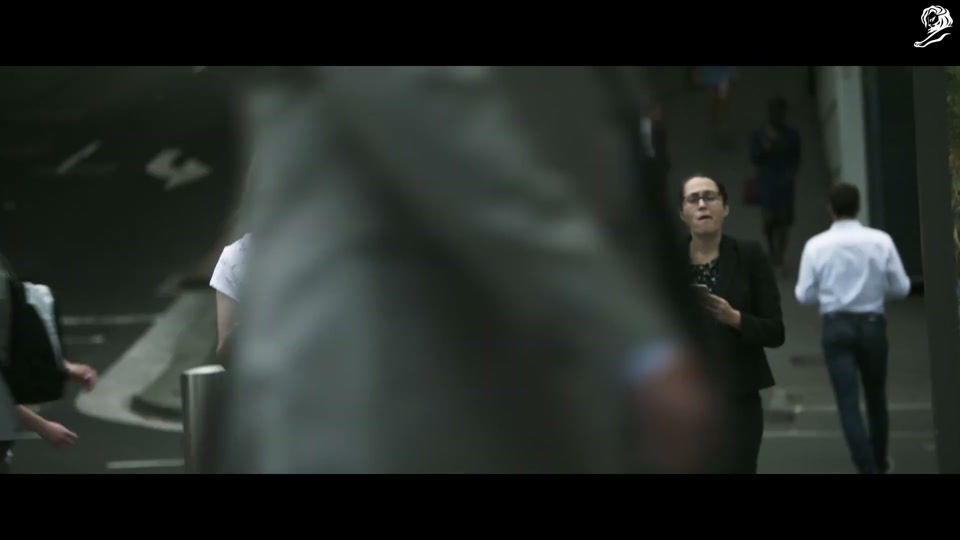
00:03 · opening The ad opens with an aerial shot of Sydney, transitioning to two young women walking down a city street, engrossed in their phones. -
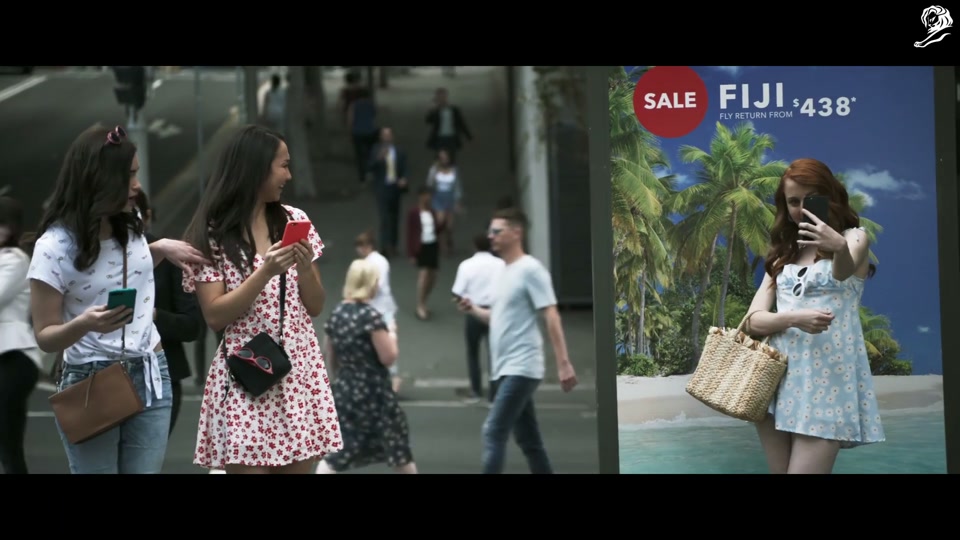
00:07 · opening The ad opens with an aerial shot of Sydney, transitioning to two young women walking down a city street, engrossed in their phones. -

00:11 · opening The ad opens with an aerial shot of Sydney, transitioning to two young women walking down a city street, engrossed in their phones. -
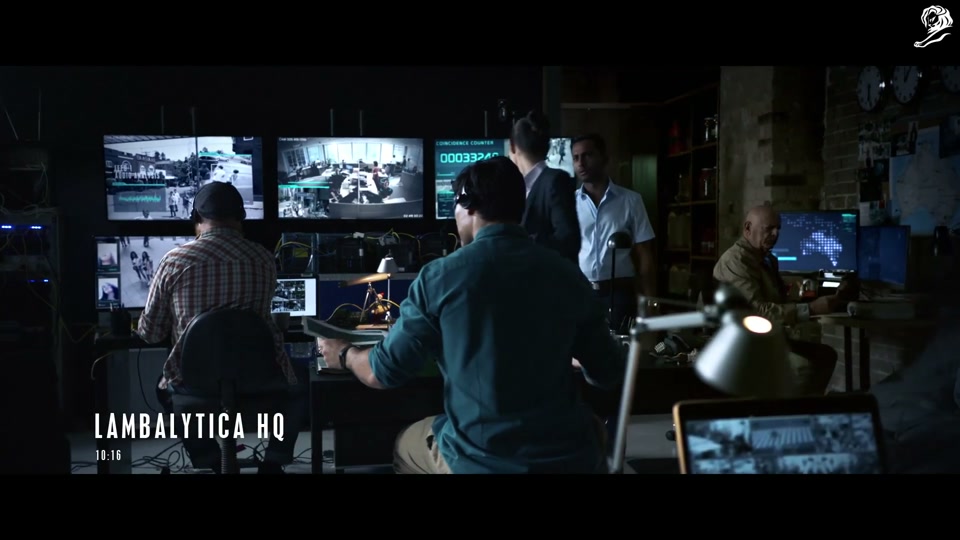
00:19 · food shot Inside the dark, server-filled headquarters of "Lambalytica," agents monitor screens showing data maps of Australia and CCTV feeds. A stern female executive explains the operation to a new recruit. -

00:23 · food shot Inside the dark, server-filled headquarters of "Lambalytica," agents monitor screens showing data maps of Australia and CCTV feeds. A stern female executive explains the operation to a new recruit. -
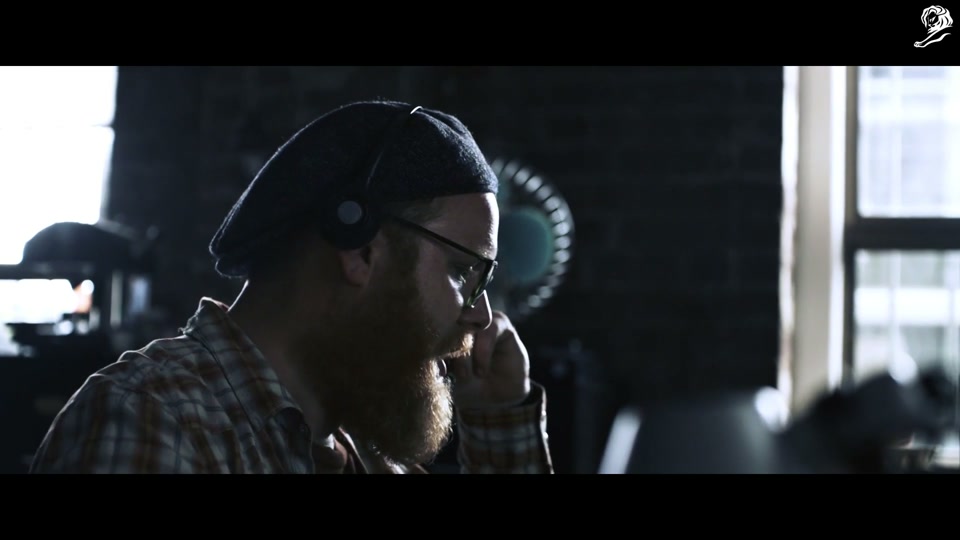
00:36 · standard An agent spots a disconnected couple in a Melbourne restaurant, both staring silently at their phones. The female executive orders him to intervene. He "deploys the wedding video," hacking the man's phone. -
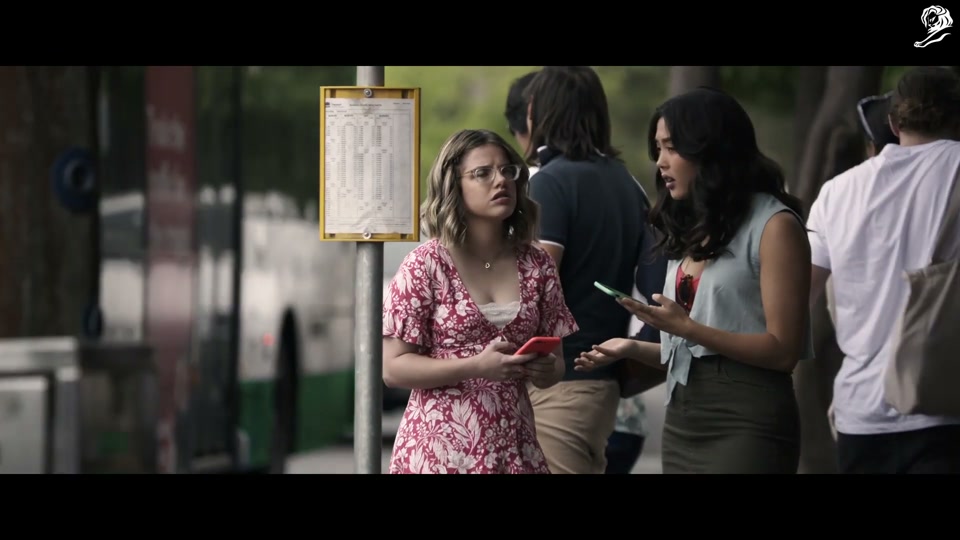
01:00 · title card In Perth, two young women at a bus stop are on their phones. One is about to "like" a social cause post when her phone is hacked by Lambalytica. -
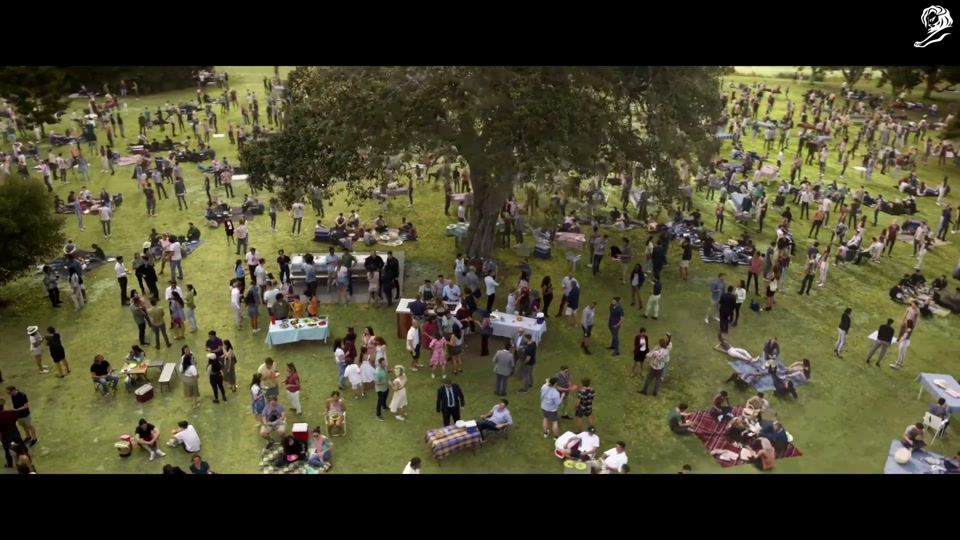
01:31 · reveal An aerial shot shows crowds of people, no longer looking at their phones, all walking purposefully towards a park in Adelaide. The Lambalytica recruit has a moment of realisation. -
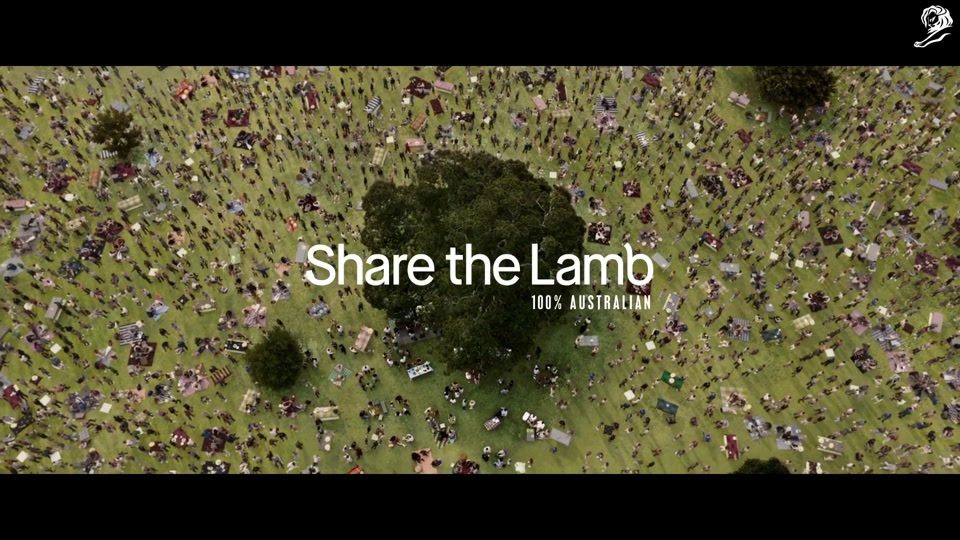
01:41 · brand frame Back in the now-celebratory Lambalytica office, everyone is eating lamb. One agent cheers that they have beaten New Zealand on the Happiness Index.
Scene-by-scene account
Show full scene breakdown
00:00–00:15
Visuals The ad opens with an aerial shot of Sydney, transitioning to two young women walking down a city street, engrossed in their phones. One sees a social media post from her friend, Mia, who appears to be on a tropical holiday. They then see a bus shelter ad for flights to Fiji, featuring the same friend, Mia, who is posing for a selfie in front of a beach backdrop. It's revealed she is not on holiday but merely taking a photo in front of an advertisement. Her friends spot her, and she looks caught out. The scene then cuts to a high-tech surveillance room, where a man in a beanie and headphones sips coffee, watching the women on multiple screens.
Dialogue and audio
- Friend 1: "Looks like Mia is having an amazing holiday."
- Friend 2: [Seeing Mia in person] "Mia?"
- Friend 1: "This is so random. We were just talking about you."
- Mia: [Forces a smile]
- Friend 2: "It's like your phone's bugged, listening to you."
- Surveillance agent (voiceover): "Oh, it's listening to you."
On-screen text
- SYDNEY (with coordinates)
- SALE FIJI FLY RETURN FROM $438
- CCTV-style data overlays showing audio analysis and facial recognition.
Meaning and context
- Directly observable: The scene establishes the theme of digital deception versus reality. Mia fakes a holiday for social media, and her friends comment on the strange coincidence of their phones seemingly listening to their conversations, a common user suspicion.
- Likely interpretation at release: This is a clear parody of "phoning it in" and the curated, often fake, nature of social media life. The joke about phones listening is a widely understood cultural anxiety about digital privacy. The reveal of the surveillance headquarters introduces a thriller/sci-fi element.
- Verification needed: Confirm the prevalence of public discussion around phone surveillance and targeted advertising in 2019.
00:15–00:31
Visuals Inside the dark, server-filled headquarters of "Lambalytica," agents monitor screens showing data maps of Australia and CCTV feeds. A stern female executive explains the operation to a new recruit. An older, bow-tied man, presumably the head scientist, holds up a lamb chop on a fork while looking at a glowing map of Australia. He grimaces when the recruit questions the legality of their operation.
Dialogue and audio
- Female executive: "The Lambalytica algorithm scrapes the data of the entire country. Then hacks people's devices to actually bring them together, face-to-face."
- Head scientist: "The science has proven it's Australia's only hope."
- Recruit: "Is that legal?"
- Head scientist: [Scoffs] "I'm a scientist, not a lawyer."
On-screen text
- LAMBALYTICA HQ
Meaning and context
- Directly observable: The organisation's name, "Lambalytica," is explicitly shown. Their mission is to use invasive surveillance for the stated social good of forcing face-to-face interaction.
- Likely interpretation at release: "Lambalytica" is a direct and unmistakable parody of Cambridge Analytica, the political consulting firm at the center of a major Facebook data scandal that was highly prominent in the news from 2018 onwards. The joke hinges on subverting the sinister implications of mass data collection for a wholesome purpose. The scientist's line, "I'm a scientist, not a lawyer," is a classic trope justifying morally ambiguous actions for a "greater good."
- Verification needed: The cultural prominence of the Cambridge Analytica scandal in Australia in late 2019/early 2020.
00:31–00:51
Visuals An agent spots a disconnected couple in a Melbourne restaurant, both staring silently at their phones. The female executive orders him to intervene. He "deploys the wedding video," hacking the man's phone. A photo of the couple from their wedding day appears on his screen. He looks up, smiles at his wife, who has since changed her hair colour, and compliments her. She smiles back, and they reconnect.
Dialogue and audio
- Agent: "Chief, got some Stage 5 scrollers."
- Female executive: "Deploy the wedding video."
- Agent: "Deploying wedding video!"
- [Sound of a computer mouse click, digital glitching noises]
- Husband: [Looking at the photo] "Aww." [Looks at his wife] "You changed your hair."
- Wife: "I went blonde three years ago."
- Husband: "It looks beautiful."
- Wife: [Smiling] "Shall we get out of here?"
On-screen text
- Lambalytica (on the phone screen during the hack)
- MELBOURNE (with coordinates)
Meaning and context
- Directly observable: The scene illustrates Lambalytica's method: using personal data (a wedding photo) to break the "spell" of phone addiction and remind people of their real-life connections.
- Likely interpretation at release: "Stage 5 scrollers" is a humorous exaggeration of smartphone addiction. The husband's failure to notice his wife's hair change for three years is a comedic, if slightly bleak, commentary on how digital distraction can lead to couples becoming disconnected. The intervention is portrayed as a romantic success.
00:51–01:10
Visuals In Perth, two young women at a bus stop are on their phones. One is about to "like" a social cause post when her phone is hacked by Lambalytica. They complain about being unable to "make a difference." In Darwin, a teenage gamer is interrupted mid-game by a "GAME OVER" screen, featuring the head scientist's face superimposed on a fantasy warrior character. The scientist's voice tells him he's going to a barbecue. In Brisbane, a crowd of people walks down the street like zombies, all staring at their phones. Lambalytica monitors them.
Dialogue and audio
- Woman in Perth: "Ugh! I was just about to like a really important social cause."
- Her friend: "How are we gonna make a difference now?"
- Female executive: "Slacktivists."
- Head scientist (in-game voice): "Game over, mate. We're going to a barbecue!"
On-screen text
- PERTH (with coordinates)
- Your support matters (on the phone screen)
- DARWIN (with coordinates)
- GAME OVER
- BRISB[ANE] (with coordinates, partially obscured)
Meaning and context
- Directly observable: The ad targets different types of digital obsession: "slacktivism" (superficial online engagement), gaming, and general phone addiction.
- Likely interpretation at release: "Slacktivism" was a common term for low-effort online political action, and the ad satirises the idea that a social media "like" constitutes meaningful change. The gamer scene is a classic stereotype, and the zombie-like crowd is a visual metaphor for the isolating effects of smartphones.
01:10–01:39
Visuals An aerial shot shows crowds of people, no longer looking at their phones, all walking purposefully towards a park in Adelaide. The Lambalytica recruit has a moment of realisation. The agents, including the female executive, are now eating grilled lamb in the control room. The head scientist reveals the true unifying tool. The scene flashes to a massive barbecue in a sunny park, with hundreds of people mingling, eating, and talking. The initial characters (the three friends, the reconnected couple) are all there, happily eating lamb.
Dialogue and audio
- Female executive: "The algorithm is working."
- Recruit: "I get it... You're using 'cookies' to bring everyone together."
- Head scientist: [Takes a bite of lamb] "Not 'cookies.' We're using lamb."
- [Sizzling sound of a barbecue, upbeat music begins]
- Man at barbecue: "How good is chatting with your mates so we never hear your voice again!"
- Woman eating lamb: "It's like a food photo you can eat!"
On-screen text
- ADELAIDE (with coordinates)
- COINCIDENCE COUNTER (number rapidly increasing)
- Share the Lamb
- 100% AUSTRALIAN
Meaning and context
- Directly observable: The "cookies" pun reveals the ad's central joke: the digital tool of surveillance is just a means to deploy the analogue tool of lamb. The campaign slogan "Share the Lamb" is explicitly stated.
- Likely interpretation at release: This is the payoff to the entire setup. The ad argues that the solution to digital-age problems is the simple, traditional act of sharing a meal. The line about "a food photo you can eat" directly contrasts the digital representation of life with the real thing. The "Happiness Index" is mentioned, with the operation successfully boosting Australia's ranking.
- Contemporary reading: The joke about chatting so much "we never hear your voice again" could be read as a gentle jab at the over-sharing and constant noise of online discourse.
01:39–01:47
Visuals Back in the now-celebratory Lambalytica office, everyone is eating lamb. One agent cheers that they have beaten New Zealand on the Happiness Index. The head scientist walks past his team, observing the successful outcome.
Dialogue and audio
- Head Scientist: "Australia's just gone to number one on the happiness index."
- Agent: "Take that, New Zealand!"
- Another agent: "Easy, bro."
- Final voiceover: "Share the Lamb."
Meaning and context
- Directly observable: The ad ends with a triumphant celebration of Australia's superior "happiness," explicitly framed as a victory over rival New Zealand.
- Likely interpretation at release: The friendly rivalry between Australia and New Zealand is a long-standing cultural trope, frequently used in this campaign. Beating "the Kiwis" at anything, even a fictional happiness ranking, is a classic punchline for an Australian audience. The final shot reiterates that lamb is the catalyst for this national triumph.
- Verification needed: The actual World Happiness Report rankings for Australia and New Zealand in 2019/2020.
Verification and uncertainties
- Source reconciliation: the supplied source video was mislabeled '2026 - Happiness Index.mp4', and the analysis file's heading reads 'Happiness Index'. The advertisement is in fact the 2020 'Lambalytica' campaign, confirmed by its synopsis and by the master campaign analysis; the canonical title and year have been corrected accordingly. The 2026 advertisement is the genuine 'Happiness Index'.
- TXT errors: The provided TXT transcript has errors. For example, at 01:22, the dialogue is "How good is chatting with your mates..." whereas the transcript says "chatting with your Malil." The video audio supports "mates." The transcript also merges multiple speakers and contains fragments. The dialogue in this analysis has been corrected based on the video's audio.
- Topical claims needing release-period research:
- The exact World Happiness Report rankings for 2019 (the data available for a Jan 2020 ad). Verification: In the 2019 report, NZ was 8th and Australia 11th, confirming the joke's premise.
- Continued media prominence of the Cambridge Analytica scandal into 2019. Verification: The scandal and its fallout were still major news items throughout 2018 and 2019, making the parody highly relevant.