Lamb Side Story
2018In a typical Australian suburb, a woman in a yellow dress prepares a lamb barbecue. Her peace is interrupted by the arrival of two opposing "gangs" representing the political left and right, dressed in red and blue respectively. In a satirical homage to the musical West Side Story, the two groups face off, singing and dancing about their conflicting views on issues like same-sex marriage, climate change, and political correctness. A centrist man, who tries to sit on the fence, is comically knocked off. The woman with the barbecue eventually intervenes, declaring their outrage has gone too far and announcing the lamb is ready. The smell of the lamb and her call for unity cause the groups to abandon their conflict. They come together, accepting plates of lamb and celebrating, demonstrating that a shared love for lamb can overcome even deep political divisions.
Watch the advertisement
Historical and topical context
- Campaign year: 2018
- Assumed or known release period: January 2018.
- Primary context year: 2017
- Likely topical context window: July 2017 to January 2018
- Confidence in those dates: High
The advertisement was released into a national mood characterised by significant political and social division. The primary context year, 2017, was dominated by several polarising events that are directly referenced in the ad.
Reference: The Australian Marriage Law Postal Survey. Evidence in the ad: The explicit lyric, "'Cause it's Adam and Eve, not Adam and Steve" (0:59) was a key slogan for the "No" campaign. The subplot of "Adam" and "Steve" running off together provides a direct rebuttal. Likely relevance at release: This was the most prominent and emotionally charged public debate of late 2017. The survey ran from September to November, with the "Yes" result (61.6%) announced on November 15, 2017, and the legislation passed in December 2017. The ad, released just weeks later, was tapping into the fresh memory of a divisive campaign and celebrating the eventual outcome of equality while gently mocking the intensity of the debate. Confidence: High External verification needed: No
Reference: Political polarisation and the "culture wars". Evidence in the ad: The entire premise of "left vs right" gangs, and specific arguments over "political correctness" (1:28), the "war on Christmas" (1:33), and climate change (1:17). Likely relevance at release: Debates around political correctness and the perceived divisions between progressive and conservative viewpoints were a constant feature of the Australian media landscape in 2017. The ad satirises the performative and often repetitive nature of these arguments as seen on panel shows and social media. Confidence: High External verification needed: No
Reference: 2017 Australian parliamentary eligibility crisis (the "Citizenship Seven"). Evidence in the ad: Tentative. The scene with the "man on the fence" (1:35) could be a subtle nod to the political chaos and instability of 2017, where numerous politicians were found to be ineligible to sit in parliament, causing widespread disruption and by-elections. The general theme of political absurdity aligns with the public mood during this period. Likely relevance at release: The crisis unfolded from July 2017 onwards, dominating political news and creating a sense of frustration with the entire political class. The ad's portrayal of political actors as being caught up in absurd conflicts resonated with this sentiment. Confidence: Low to Medium External verification needed: Yes (to confirm if this link was intended or widely interpreted at the time).
Campaign meaning
Creative premise
The ad uses a large-scale musical theatre parody of West Side Story to satirise Australia's contemporary political polarisation. It stages the ideological conflict between the political "left" and "right" as a suburban gang fight, using stereotyped arguments and theatrical choreography to highlight the absurdity of the division.
Message
Explicit message:
- You should never "Lamb alone" (2:34).
- Lamb is something everyone can agree on (2:25).
- Australians should put aside their differences and "all get along" (2:08).
Strongly implied message:
- Political division and outrage culture have become performative and ridiculous.
- The "sensible centre" of Australia is exhausted by the constant conflict between the political extremes.
- Shared cultural rituals, like a lamb barbecue, are more fundamental to Australian identity and unity than divisive political ideologies.
- While the issues are serious, the way they are debated is often counter-productive.
Tentative interpretation:
- The ad promotes a form of apolitical centrism, suggesting that disengaging from ideological battles in favour of social harmony is the preferable Australian way.
Role of lamb
Lamb is the hero and the deus ex machina of the story. It functions as the ultimate symbol of unity and common ground. Its preparation by the neutral "centrist" character and its eventual consumption by all parties literally brings the divided nation together. Lamb transcends politics, representing a shared cultural experience that is positioned as more authentic and important than the ideological squabbles that divide the characters.
Worldview evidence
Centrism and Depoliticisation
Classification: Strongly implied Evidence: 1:48, 2:03. The exasperated woman in yellow actively stops the political fight, and the resolution involves abandoning the argument entirely in favour of a shared meal. Meaning at release: This endorsed the idea that the "exhausted majority" or "sensible centre" should reject the noise from the political fringes and find common ground in everyday life. Possible contemporary difference: This could be read today as promoting apathy or a privileged "both-sides" neutrality that ignores the substance of the debates.
Inclusivity as a Core Value
Classification: Explicit Evidence: 2:11, 2:27. The final street party includes people of all ages, races, and (formerly) political persuasions, including the gay couple, coming together. The brand platform is about unity. Meaning at release: Lamb is for everyone, regardless of background or belief. This continued the campaign's pivot towards a more modern, multicultural, and inclusive vision of Australia.
Satirical View of a Mediatised Political Class
Classification: Strongly implied Evidence: 0:25. The woman specifically calls out "extreme left and right-wing commentators," not ordinary people. The behaviour is theatrical and performative. Meaning at release: The primary target of the satire is not the issues themselves, but the media and political figures who perform outrage for a living, amplifying division.
Humour, tone and satire
- Tone: The tone is satirical, theatrical, and energetic, while carrying a clear message of unity.
- Principal joke mechanisms: The core mechanism is parody, using the dramatic structure of West Side Story to frame political debates as an absurd gang rivalry. This is supported by exaggeration (the Broadway choreography for political arguments), stereotype (the costumes and lyrical positions of the "left" and "right" gangs), and bathos (resolving a high-stakes ideological conflict with the simple announcement that "the lamb is ready").
- Targets of satire: The primary targets are the performative nature of political commentary, the echo chambers of social media, and the way the media amplifies division. Both the left and right are satirised for their predictable talking points and self-righteousness.
- Affectionate parody versus genuine criticism: The ad is a genuine criticism of political polarisation and outrage culture. However, the parody of the Australian public is affectionate; the resolution implies that, deep down, most people would rather share a barbecue than argue.
Campaign evidence summary
Core message
Political divisions are becoming absurd and performative. Australians should ignore the noise from the extremes and remember that our shared culture and love for simple pleasures, like a lamb barbecue, are the things that truly unite us.
Values supported by this ad
- Unity
- Inclusivity
- Centrism / Moderation
- Social harmony over political conflict
- Authentic cultural rituals (the BBQ)
Role of lamb
Lamb is the peacemaker. It is the one thing all Australians can agree on, functioning as a powerful symbol of unity that can cut through even the most entrenched ideological divisions and bring people together.
Most important topical or historical elements
- The 2017 Australian Marriage Law Postal Survey.
- The heightened sense of political polarisation ("culture wars") in 2017, particularly around climate change and "political correctness."
Uncertainties
- Whether the "man on the fence" scene was a direct reference to the 2017 citizenship crisis or just a general metaphor for political neutrality.
- Whether specific characters were intended to be parodies of individual Australian commentators or just archetypes.
Themes and connections
This advertisement belongs to Era 3 — Platform Advertising and Social Debate.
Keyframe gallery
6 representative frames, in chronological order.
-
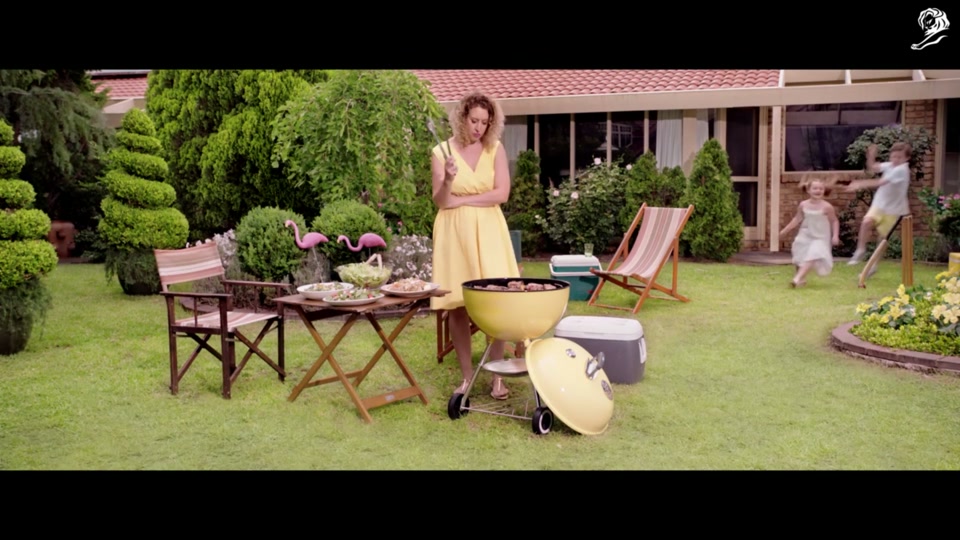
00:05 · opening The scene opens with an overhead shot of a quiet, manicured suburban cul-de-sac. A woman in a bright yellow dress is in her backyard, tending a matching yellow kettle barbecue filled with sizzling lamb chops and kebabs. -
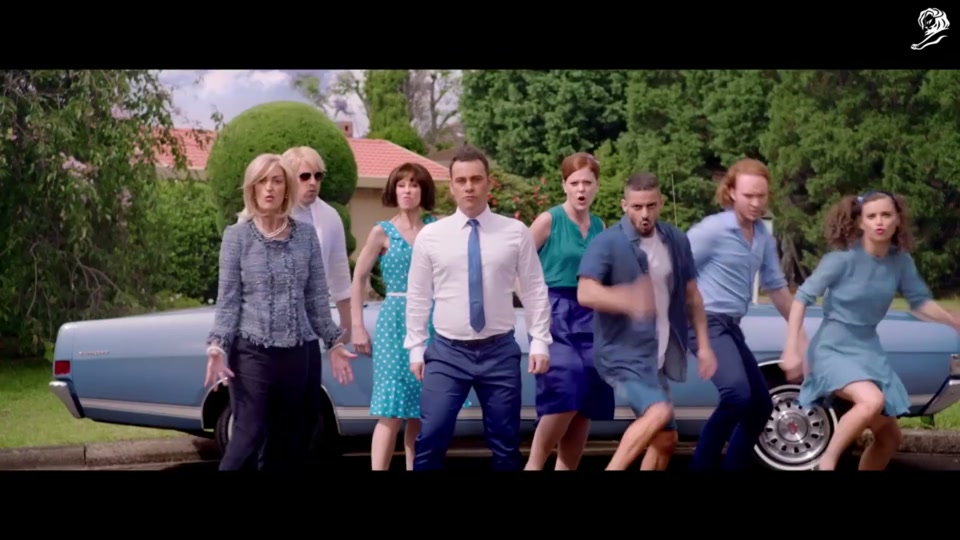
00:34 · food shot The woman at the barbecue notices the gangs and ushers her two children inside. The two groups dance towards each other with aggressive, theatrical choreography. -
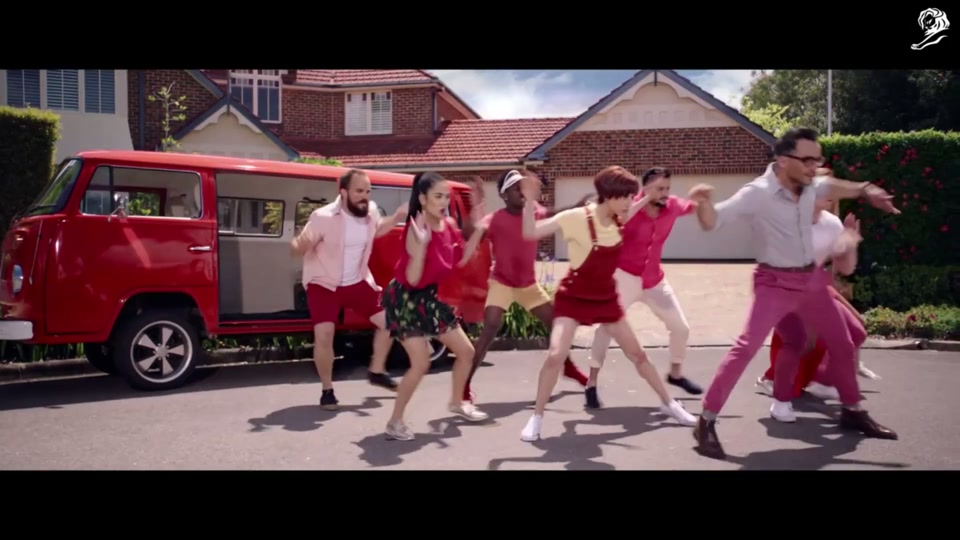
00:56 · standard The "right-wing" gang (blue) sings and dances, led by the man in the tie. They are dressed in smart-casual and business-like attire. The group includes a character resembling a well-known conservative commentator. -

01:10 · standard A new pair of characters appear, a man whose shirt is embroidered with "Adam" and another man. The first man ("Steve") says he leans right, but takes Adam's hand and they run off together. -
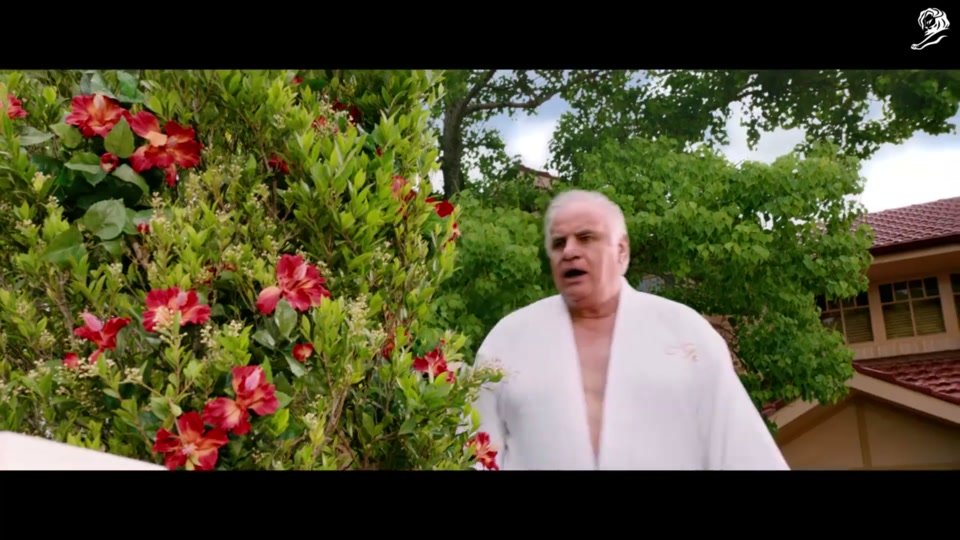
01:42 · standard A man in a business suit sits on a white picket fence, attempting to remain neutral. As the gangs march past, he is sprayed with a hose by an older man in a bathrobe (Sam Kekovich) and knocked off the fence. -
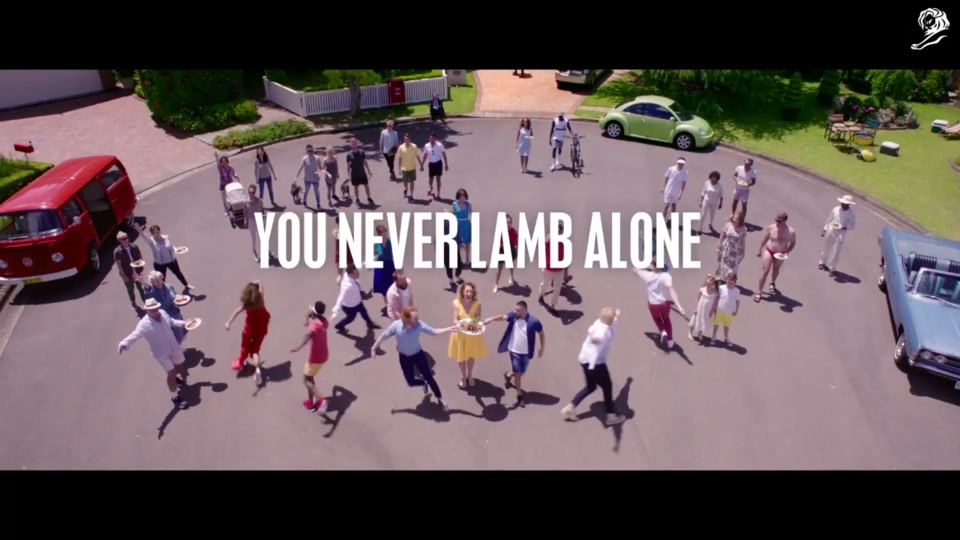
02:35 · brand frame The woman in yellow sings directly to the gangs, telling them their outrage has gone too far just as the lamb is ready. She holds up the sizzling platter of lamb. The sight and smell of the lamb pacifies the crowd.
Scene-by-scene account
Show full scene breakdown
00:00 - 00:23
Visuals
The scene opens with an overhead shot of a quiet, manicured suburban cul-de-sac. A woman in a bright yellow dress is in her backyard, tending a matching yellow kettle barbecue filled with sizzling lamb chops and kebabs. Two groups of people, one dressed in shades of blue and the other in shades of red, begin to emerge from their homes and vehicles, snapping their fingers rhythmically and glaring at each other. The choreography and finger-snapping are a direct visual parody of the opening scenes of West Side Story.
Dialogue and audio
The audio begins with suburban sounds (a dog barking) before transitioning into the iconic finger-snapping rhythm from West Side Story's prologue. The music builds in a dramatic, orchestral, Broadway style.
On-screen text
None.
Meaning and context
Directly observable: Two opposing groups, distinguished by colour-coded clothing (red and blue), are set for a confrontation in a suburban street, using choreography that mimics a famous musical. A woman in a neutral yellow is having a barbecue, seemingly unaware.
Likely interpretation at release: The scene establishes the core satirical premise: a parody of West Side Story where the rival gangs (Jets and Sharks) are replaced by Australia's political "left" (red) and "right" (blue). The suburban setting frames their ideological conflict as a neighbourhood dispute, immediately trivialising it. The finger-snapping and stylised movement mock the self-serious, performative nature of political polarisation.
00:24 - 00:38
Visuals
The woman at the barbecue notices the gangs and ushers her two children inside. The two groups dance towards each other with aggressive, theatrical choreography. The "right" is led by a man in a white shirt and blue tie. The "left" is led by a man in glasses and a grey shirt.
Dialogue and audio
Woman in yellow: "Quick kids, go inside! It's the extreme left and right-wing commentators, represented as Broadway musical-style street gangs as a satirical commentary on our current divided political climate!" [TXT says: "quick kids go inside it's the extreme left and rightwing commentators representa as Broadway musical style Street games as iCal commentary and our current divided political climate"]
Little girl: "What?"
Woman in yellow: "Just go inside!"
Gangs (chanting): "Right! Left! Right! Left!"
A woman from the "right" gang yells: "Fight!"
On-screen text
None.
Meaning and context
Directly observable: The woman explicitly identifies the gangs as representations of the "extreme left and right-wing commentators" and calls the situation a "satirical commentary". This self-aware dialogue serves as exposition for the audience.
Likely interpretation at release: The joke is in the ridiculously verbose and meta explanation the mother gives her children, lampshading the ad's entire premise. It confirms the satire is aimed at political commentators and the media landscape, which was perceived as increasingly divided. The child's confused "What?" mirrors the audience's likely reaction to the mother's jargon-filled warning, before she simplifies it to a command to go inside, just as many might wish to retreat from political noise.
00:38 - 1:02
Visuals
The "right-wing" gang (blue) sings and dances, led by the man in the tie. They are dressed in smart-casual and business-like attire. The group includes a character resembling a well-known conservative commentator. The "left-wing" gang (red) sings its rebuttal, dressed in more diverse, bohemian, or trendy styles.
Dialogue and audio
Right-wing leader: "If you're a right, you are right, about every single issue. The left can go and cry..." Right-wing gang: "...throw them a tissue!" Blonde man on right: "You tell 'em, daddy-o!"
Left-wing leader: "If you're a left, you stick up for the little guy!" (He corrects himself) "I mean, person." Left-wing gang: "We're all equal, no one left behind!"
Right-wing woman: "If you're a right, you think equal rights are wrong. 'Cause it's Adam and Eve, not Adam and Steve!"
On-screen text
None.
Meaning and context
Directly observable: The song lyrics lay out stereotyped positions. The right claims absolute correctness and dismisses the left as overly emotional. The left presents itself as a champion for equality, correcting its own language to be more inclusive ("guy" to "person"). The right explicitly sings against same-sex marriage.
Likely interpretation at release: This section directly references key debates from 2017.
- "Adam and Eve, not Adam and Steve": This was a common slogan used by opponents of same-sex marriage. Its inclusion is a direct, high-confidence reference to the contentious Australian Marriage Law Postal Survey of 2017, where the nation voted on legalising same-sex marriage. The results were announced in November 2017, just two months before this ad's release.
- "stick up for the little guy/person": This satirises the left's focus on social justice and politically correct language, a frequent topic of conservative critique.
1:03 - 1:34
Visuals
A new pair of characters appear, a man whose shirt is embroidered with "Adam" and another man. The first man ("Steve") says he leans right, but takes Adam's hand and they run off together. The left and right gangs continue to sing and dance their opposing views.
Dialogue and audio
Left-wing gang (singing to the right): "Well I'm Steve, and I lean right." [TXT misattributes this line to the right-wing gang. Visually and narratively it's a new character responding to the "Adam and Steve" line.] Steve: "Let's go, Adam."
Left-wing gang: "You're thinking is so 1950s! All you care about is the war on terror!"
Woman in yellow (interjecting from her yard): "Um, how about this beautiful weather?"
Right-wing gang: "Global warming's a lie!" Right-wing leader: "It's BS that we won't buy!"
Left-wing gang: "The ice caps are melting, the seas are rising! We find your ignorance very surprising!"
Right-wing leader: "Stop with your constant political correctness!" [TXT says: "political corness"] Right-wing gang: "Now we can't even celebrate Christmas!"
On-screen text
None.
Meaning and context
Directly observable: The ad introduces a gay couple ("Adam and Steve") who defy the right's stereotype. The argument pivots to other "culture war" topics: terrorism, climate change, and "political correctness" around Christmas. The woman in yellow attempts to change the subject to something neutral (the weather), but both sides immediately politicise it.
Likely interpretation at release: This sequence continues to satirise the loudest and most divisive arguments of 2017.
- Climate Change: The "Global warming's a lie" versus "The ice caps are melting" exchange was a staple of the political divide, particularly with ongoing debates about energy policy in Australia.
- "War on terror": A recurring theme in political discourse, often associated with the right's focus on national security.
- "War on Christmas": The claim that "political correctness" prevents the celebration of Christmas was a common talking point in conservative media circles during the period.
1:35 - 2:03
Visuals
A man in a business suit sits on a white picket fence, attempting to remain neutral. As the gangs march past, he is sprayed with a hose by an older man in a bathrobe (Sam Kekovich) and knocked off the fence. The gangs converge, shouting "Right! Left!" at each other. The woman in yellow marches into the street, looking furious.
Dialogue and audio
Man on fence (singing meekly): "Well, I'm too scared to cause offence... that's why I'm sitting on the fence." Man with hose (Sam Kekovich): "Get off my fence!" (Sprays him)
Gangs: "Right! Left! Right! Left!"
Woman in yellow (shouting): "Stop!"
On-screen text
None.
Meaning and context
Directly observable: The "man on the fence" is a literal representation of a political centrist or undecided voter who is ultimately attacked for his neutrality. The woman in yellow finally intervenes to stop the fight.
Likely interpretation at release: This is a critique of fence-sitting, suggesting that in a polarised environment, refusing to engage is not a safe position. The cameo by Sam Kekovich, a long-time "Lambassador" known for his satirical, hyper-patriotic persona in earlier lamb ads, is a nod to the campaign's history. The woman in yellow now represents the "sensible centre" actively intervening, not just passively observing.
2:03 - 2:46
Visuals
The woman in yellow sings directly to the gangs, telling them their outrage has gone too far just as the lamb is ready. She holds up the sizzling platter of lamb. The sight and smell of the lamb pacifies the crowd. The opposing leaders reach for the lamb, and the gangs mingle, hug, and dance together happily. The final shots show the entire cul-de-sac as a harmonious street party, with everyone eating lamb.
Dialogue and audio
Woman in yellow (singing): "We're being ridiculous! These issues are serious... but this outrage has gone too far... and the lamb is ready!" (Music shifts to a hopeful, unifying tone) Woman in yellow (singing): "Whether you're left or right, there's no right or wrong, no reason we can't all get along! And remember we live in this great country, with beaches and budgies and lamb barbies!" [TXT says: "beaches and buies"]
Various gang members: "Pass me that plate! Give me a bite!"
Woman in yellow: "See? We can all agree on something."
Entire cast (singing): "Because we never, never, never... Lamb alone!"
On-screen text
- YOU NEVER LAMB ALONE
- We Love Our Lamb
Meaning and context
Directly observable: The woman explicitly states that while the issues are serious, the "outrage" is the problem. Lamb is presented as the solution. The core message "You Never Lamb Alone" is the finale.
Likely interpretation at release: This is the campaign's central thesis. It argues for depolarisation and unity, positioning lamb as the catalyst. It suggests that what unites Australians (a love of barbecues, beaches, and a relaxed lifestyle) is more important than what divides them politically.
- "Beaches and budgies": "Budgies" is slang for "budgie smugglers," a type of men's swimming brief, humorously reinforcing the Australian cultural setting. A man in the background is wearing them.
- The final message, "You Never Lamb Alone," positions the brand and product as a symbol of community, inclusivity, and a solution to social friction.
Verification and uncertainties
- Uncertain dialogue / TXT errors:
- 0:27: TXT "representa as Broadway musical style Street games as iCal commentary" should be "represented as Broadway musical-style street gangs as a satirical commentary".
- 1:03: TXT misattributes a line sung by a new character ("Steve") to the left-wing gang.
- 1:28: TXT "political corness" should be "political correctness".
- 2:15: TXT "beaches and buies" should be "beaches and budgies".
- Uncertain identities or references:
- Confirm if the blonde man in sunglasses (0:45) was intended as a specific parody (e.g., of Milo Yiannopoulos), as some contemporary commentary suggested.
- Topical claims needing release-period research:
- Confirm the prominence of the "War on Christmas" debate in Australian media in late 2017.
- Remembered background facts requiring external verification:
- The ad was widely seen as a direct response to the national mood following the marriage equality postal survey. (Verified by sources).
- Sam Kekovich's role as a long-standing "Lambassador" is key context for his cameo. (Verified by sources).