Operation Boomerang
2016The advertisement is a cinematic parody of a spy-thriller action film. It opens with a traumatic flashback to a lone Australian suffering through a bleak, lamb-less Australia Day in 1996 Warsaw. Vowing this will never happen again, the woman, now a formidable commander (played by newsreader Lee Lin Chin), launches "Operation Boomerang." This large-scale, military-style mission involves special forces teams being dispatched globally to "rescue" Australians stranded overseas and bring them home for Australia Day.
Operatives extract various Australian archetypes and celebrities from locations including London, Tokyo, Los Angeles, and Brooklyn. The mission hits a snag when one target reveals he is now a vegan, forcing an immediate "abort." Another target, retired cricketer Mitch Johnson, initially refuses to return until he is tempted by a game of backyard cricket. The final target is an Australian princess in a European palace.
The operation concludes successfully with all rescued Australians gathered for an Australia Day barbecue. The commander reports to the Prime Minister that "the barbecue is lit." The ad ends with celebrity chef George Calombaris critiquing an overcooked lamb chop and the tagline, "You never Lamb alone on Australia Day."
Watch the advertisement
Historical and topical context
Campaign year: 2016 Assumed or known release period: Released online 10 January 2016 Primary context year: 2015 Likely topical context window: July 2015 to January 2016 Confidence in those dates: High
The ad was released in January 2016, making the preceding year, 2015, the primary lens for topical references.
Reference: The rising visibility of veganism. Evidence in the ad: The central joke of aborting the rescue of the Brooklyn hipster (01:13) because he is "a vegan now," followed by the Commander's disgusted sigh "Vegans" (01:19) and the use of a flamethrower on his apartment. Likely relevance at release: Market research shows a significant increase in vegan food products and Australians identifying as vegetarian or vegan in the years leading up to 2016. Between 2014 and 2016, vegan food product launches in Australia grew by 92%. The joke taps into a mainstream cultural conversation where veganism was becoming more prominent but was still seen by some as a fringe or "un-Australian" lifestyle choice, especially in contrast to the meat-heavy tradition of the barbecue. The ad's joke was controversial and drew over 50 complaints to the Advertising Standards Bureau. Confidence: High External verification needed: No
Reference: Australians' fascination with Crown Princess Mary of Denmark. Evidence in the ad: The scene in "Definitely Not Copenhagen" (01:35) featuring actors parodying Princess Mary and Prince Frederik. An operative "rescues" the Australian-born princess. Likely relevance at release: Mary Donaldson's story of a Tasmanian commoner meeting a prince in a Sydney pub and becoming royalty was a source of national fascination since their engagement in 2003. This interest remained high throughout the period. The ad plays on the idea that even royalty would be compelled to return for a proper Australian celebration. Confidence: High External verification needed: No
Reference: Concerns over home-grown terrorism and Australians overseas. Evidence in the ad: The entire ad uses the visual language of a military/counter-terrorism operation to "bring Australians home." Likely relevance at release: The context year of 2015 was marked by significant events related to terrorism. It began in the shadow of the Lindt Cafe siege in Sydney (December 2014). Throughout 2015, there were ongoing concerns about Australians joining conflicts in Syria and Iraq and the potential for domestic terror plots. The ad's premise of a massive state-sponsored operation to bring citizens home, while used for satire, would have resonated with a public accustomed to seeing news reports about national security operations and the fates of Australians abroad. The parody format allowed MLA to tap into this high-stakes national mood for a low-stakes commercial purpose. Confidence: Medium External verification needed: No
Reference: Celebrity cameos from sport and media. Evidence in the ad: Appearances by Lee Lin Chin, Sam Kekovich, Stephen Moore, Mitchell Johnson, Nathan Lyon, and George Calombaris. Likely relevance at release: The selection of celebrities was culturally specific to the time. Lee Lin Chin was an iconic, deadpan SBS newsreader. Mitch Johnson was coming off a period of fearsome dominance in international cricket. Stephen Moore was the captain of the Wallabies. George Calombaris was a high-profile celebrity chef, primarily through the TV show MasterChef Australia. Sam Kekovich was the original Lambassador, linking back to the campaign's history. Confidence: High External verification needed: No
Campaign meaning
Creative premise
The ad's creative premise is a satirical parody of a big-budget Hollywood spy thriller. It imagines an elite government agency, "Operation Boomerang," whose sole mission is to ensure no Australian, no matter where they are in the world, is deprived of eating lamb on Australia Day. The humour derives from the extreme, militaristic measures used to solve this trivial "problem."
Message
Explicit message:
- "You never Lamb alone on Australia Day." (01:57)
- "We love our Lamb." (02:00)
- Lamb chops should not be cooked "well done." (01:57)
Strongly implied message:
- Eating lamb on Australia Day is a patriotic duty and a core part of the national identity.
- Failing to participate in this ritual, especially by becoming a vegan, is a form of cultural betrayal.
- Australia is a nation that looks after its own, ensuring they can participate in essential cultural rituals like the barbecue.
- Australian national identity is defined by shared, informal social rituals (like backyard cricket and BBQs) more than formal occasions.
Tentative interpretation:
- The ad playfully satirizes Australia's own jingoism and "ocker" patriotism by taking it to a ludicrous extreme.
- It frames Australia as a desirable homeland that expatriates should always return to, positioning overseas life as less fulfilling.
Role of lamb
Lamb functions as the central element of a national secular ritual: the Australia Day barbecue. It is elevated from a mere food product to a symbol of patriotism, identity, and social unity. The entire narrative is driven by the "need" to consume lamb on this specific day. Refusing lamb (as the vegan does) is treated as a rejection of national identity itself. The final joke from the chef reinforces that there is a "right" way to honour this ritual, which involves cooking the lamb to perfection.
Worldview evidence
Australian identity is paramount
Classification: Strongly implied Evidence: The entire premise of "Operation Boomerang" is to rescue Australians from overseas for a national ritual. Meaning at release: The ad suggests that being Australian and participating in Australian traditions is more important than any overseas career, experience, or even royal duty. It presents a strong, unified, and desirable national identity. Possible contemporary difference: The jingoistic, militaristic framing might be viewed more critically today, with greater awareness of Australia's complex foreign relations and the sensitivities around Australia Day itself.
Mateship and inclusion (with satirical exclusion)
Classification: Strongly implied Evidence: 01:57 - "You never Lamb alone on Australia Day." The entire operation is about bringing people together. Meaning at release: The core value is that all Australians should be together on the national day. However, this is satirically contrasted with the violent exclusion of the vegan (01:13), who has willingly placed himself outside the cultural norm and is therefore "left behind."
Tradition is non-negotiable
Classification: Strongly implied Evidence: 00:03 - The "trauma" of missing a barbecue in 1996 motivates a decades-long mission. 01:27 - "No one retires from backyard cricket." Meaning at release: Core Australian traditions like the BBQ and backyard cricket are presented as unbreakable, lifelong commitments that even professional athletes cannot escape. They are duties as much as pleasures.
Larrikin anti-authoritarianism
Classification: Explicit / Strongly implied Evidence: The entire ad's tone, which parodies serious government and military operations. Meaning at release: While using the visuals of authority, the ad's soul is anti-authoritarian. It takes serious cinematic language and applies it to a trivial subject (a barbecue), undercutting pomposity. This self-deprecating humour is a classic feature of the Australian "larrikin" archetype.
Humour, tone and satire
- Tone: The ad maintains an epic, cinematic, and serious tone which creates a constant humorous contrast with the absurd subject matter.
- Principal joke mechanisms:
- Parody: It heavily parodies the spy/action thriller genre (e.g., James Bond, Mission: Impossible).
- Juxtaposition: The primary joke is the juxtaposition of high-stakes military action with the low-stakes goal of a barbecue.
- Satire: It satirises jingoistic patriotism, expatriate stereotypes, and the cultural debate around veganism.
- Cameos and In-Jokes: The use of well-known Australian figures and cricket-specific jokes ("Nice, Garry") rewards viewers with cultural knowledge.
- Targets of satire:
- Vegans: Portrayed as traitors to the Australian way of life. This was the most controversial element.
- Expatriates: Gently mocked as being lost or incomplete without Australia (the lonely man in the pub, the corporate drone in Tokyo).
- Australian Patriotism: Affectionately parodied by exaggerating the importance of a lamb barbecue to the level of a national security crisis.
Campaign evidence summary
Core message
Eating lamb at a barbecue on Australia Day is an essential, non-negotiable part of the Australian national identity, a patriotic duty that must be upheld at all costs, even if it requires a global military-style operation to bring expatriates home.
Values supported by this ad
- Patriotism and national pride.
- The supreme importance of mateship and togetherness (for non-vegans).
- The sanctity of tradition, particularly the Australia Day BBQ.
- A self-deprecating, larrikin sense of humour.
Role of lamb
Lamb is the sacred centrepiece of the Australia Day ritual. It is not just food; it is a symbol of national unity, identity, and belonging. To "lamb alone" or, worse, not at all, is to be un-Australian.
Most important topical or historical elements
- The parody of action/spy thrillers, a popular film genre.
- The rise of veganism as a mainstream cultural talking point.
- The ongoing public fascination with Australian-born royal, Princess Mary of Denmark.
- Cameos from celebrities who were highly relevant in 2015, including Lee Lin Chin, Mitch Johnson, and George Calombaris.
Uncertainties
- The identities of some of the non-celebrity actors.
- Whether the choice of Warsaw in the opening scene has a specific significance beyond being a stereotypically bleak, cold location.
Themes and connections
This advertisement belongs to Era 2 — Transition and Expansion.
Keyframe gallery
5 representative frames, in chronological order.
-
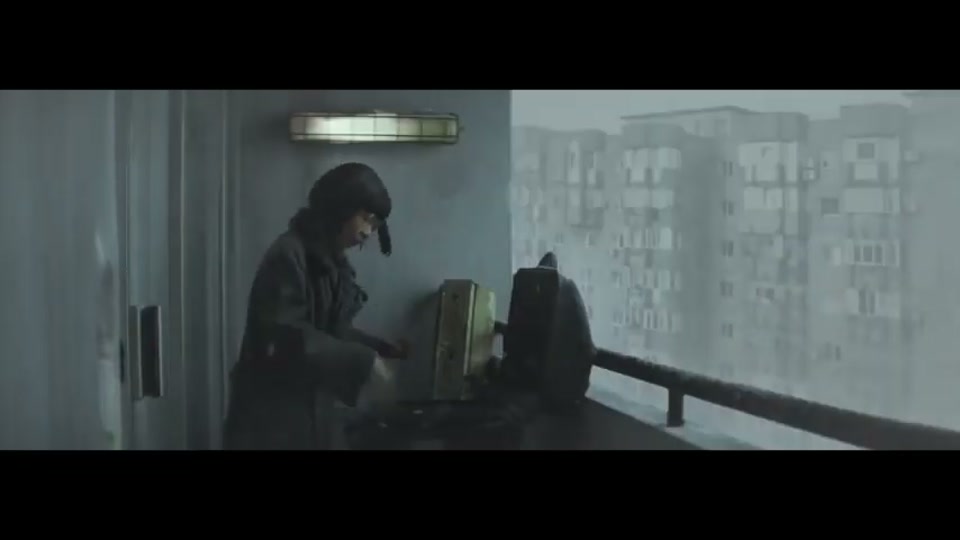
00:15 · opening The ad opens on a vast, grey, Soviet-era apartment block in a bleak, snowy landscape. The mood is oppressive and cold. A young woman with glasses peers nervously from behind a curtain. -
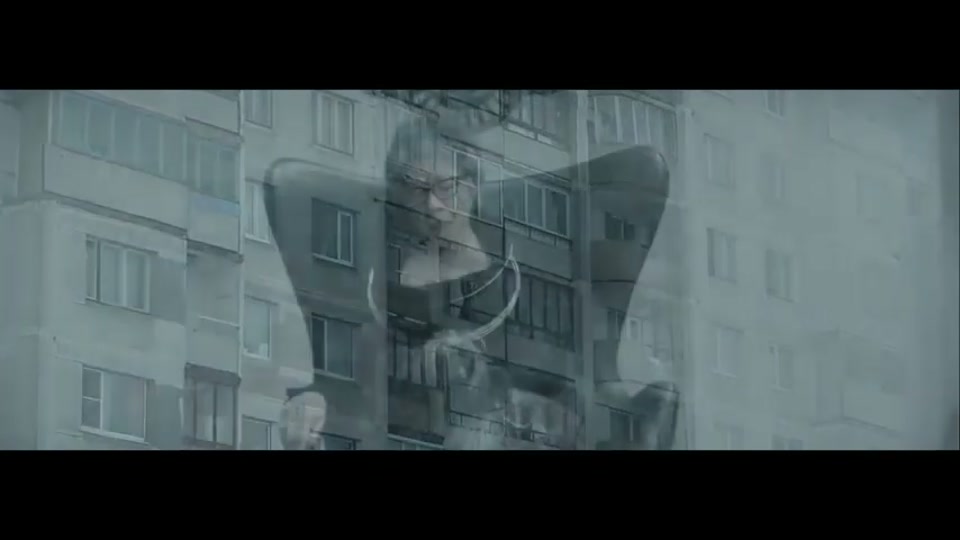
00:22 · opening The ad opens on a vast, grey, Soviet-era apartment block in a bleak, snowy landscape. The mood is oppressive and cold. A young woman with glasses peers nervously from behind a curtain. -
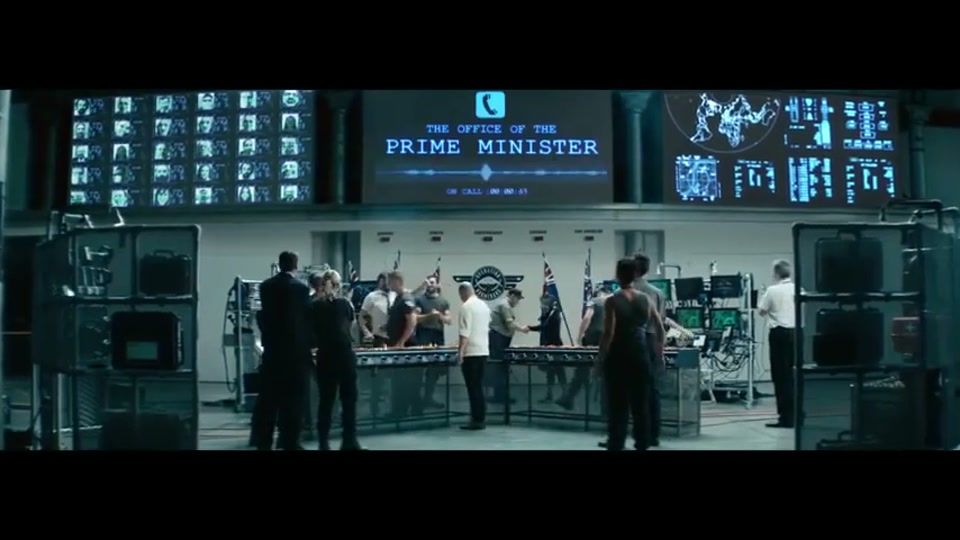
00:52 · standard Inside the command centre, a general briefs a room full of operatives. A world map shows targets marked in red. Special forces teams in black tactical gear board helicopters. -

01:22 · standard Back in the command centre, two technicians receive the "abort" order with alarm. Commander Chin looks up, displeased. -
01:49 · brand frame The final extraction takes place at a European palace. A royal couple, resembling Crown Prince Frederik and Australian-born Crown Princess Mary of Denmark, are waving from a balcony.
Scene-by-scene account
Show full scene breakdown
00:00 - 00:30
Visuals
The ad opens on a vast, grey, Soviet-era apartment block in a bleak, snowy landscape. The mood is oppressive and cold. A young woman with glasses peers nervously from behind a curtain. On a windswept balcony, she struggles to light a tiny, makeshift grill. The scene transitions to a striking, older version of the same woman (Lee Lin Chin), now dressed in a severe, high-fashion black outfit. She sits in a large, modernist black chair in a sterile, white command centre, stroking a small, long-haired dog. She gives a determined look to the camera and orders the operation to begin. An aircraft carrier with an "Operation Boomerang" insignia cuts through the water.
Dialogue and audio
The scene is set to dramatic, ominous choral music. Narrator (Lee Lin Chin): "Warsaw. Winter, '96. Minus 17. And not a chargrill chop in sight. That was no way to spend Australia Day." A high-pitched, mournful operatic note sounds as the grill fails to light. Narrator (Lee Lin Chin): "We'll never let that happen to another Australian again." Commander (Lee Lin Chin): "Commence Operation Boomerang." The music shifts to a driving, heroic, action-movie score.
On-screen text N/A
Meaning and context
Directly observable: A woman recalls a miserable Australia Day spent in freezing Warsaw in 1996 without a proper barbecue. This memory motivates her to launch a major operation to prevent other Australians from suffering the same fate.
Likely interpretation at release: The opening establishes the ad's satirical premise: treating the absence of lamb on Australia Day as a national crisis equivalent to a military threat. The contrast between the grim "trauma" of a cold barbecue and the epic, serious tone is the core joke. Lee Lin Chin, a famously stoic and stylish newsreader for SBS, is cast against type as an action-movie commander, similar to 'M' from James Bond. Her deadpan delivery makes the absurd premise funnier.
Verification needed: Confirm the identity of the actress playing the younger Lee Lin Chin.
00:30 - 01:15
Visuals
Inside the command centre, a general briefs a room full of operatives. A world map shows targets marked in red. Special forces teams in black tactical gear board helicopters. The action cuts between several "extraction" scenarios:
- London: A sad-looking man sits alone at a pub bar. Operatives storm in.
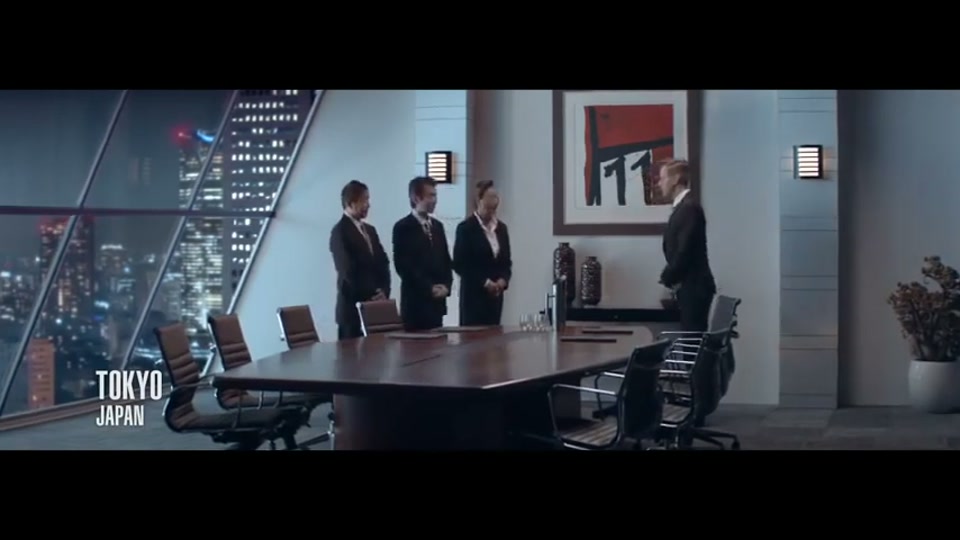
- Tokyo: An Australian businessman in a suit bows to Japanese colleagues in a high-rise boardroom. Operatives crash through the window from ropes.
- Los Angeles: A man is in a dentist's chair, mouth held open. Operatives, including a female dentist, suddenly turn on him.
- Twickenham, England: A burly rugby player (Stephen Moore) sits in a locker room. Operatives approach him.
- Brooklyn, New York: A bearded, hipster-ish man in a singlet is in his apartment. The door is blown off its hinges and operatives storm in. The scene is intercut with night-vision shots.
Dialogue and audio
General: "Right now, there's thousands of Australians stranded overseas, with a snowball's chance in hell of eating lamb on Australia Day." Lead Operative: "Let's go and get 'em!" Man in London Pub: (Looking at his pint) "My finger's warm... that's bad." Operative: "Let's go." Japanese businessmen: "Kyo wa arigatou gozaimasu." (Thank you for today.) Operative (to businessman): "We're bringin' you home for Australia Day!" Operative (to rugby player): "You've been here three months. It's time to go home." Lead Operative (to man in Brooklyn): "C'mon mate, in a few hours you'll be eatin' lamb on the beach." Man in Brooklyn: "But I'm a vegan now." A dramatic musical sting hits. The lead operative stares in shock and horror.
On-screen text
- LONDON / UNITED KINGDOM
- TOKYO / JAPAN
- LOS ANGELES / CALIFORNIA
- A screen in the command centre shows a target profile with the word "EXTRACTED".
- TWICKENHAM / ENGLAND
- BROOKLYN / NEW YORK
Meaning and context
Directly observable: The operation unfolds as a series of non-consensual "rescues" of Australians from mundane overseas situations. The mission is abruptly aborted for one target when he declares himself a vegan.
Likely interpretation at release: The ad parodies Hollywood action movie tropes (the briefing, the gear, the dramatic entries). Each scenario plays on an expatriate stereotype: the lonely Aussie in a London pub, the corporate worker in Tokyo, the hipster in Brooklyn. The joke about the warm beer in London is a classic Australian complaint about England. The reveal that one of the "Australians in peril" is now a vegan is a key punchline. The operative's horrified reaction and the order to "abort" satirically frames veganism as an act of betrayal against Australian identity, so profound that it disqualifies someone from being "rescued" for an Australia Day BBQ. This taps into the growing cultural conversation and media trend around veganism in Australia around 2014-2015.
Contemporary reading: The joke about forcefully extracting people from foreign countries and the use of the term "Operation Boomerang" was criticised by some at the time of release as insensitive, particularly in its appropriation of an Indigenous object for a theme celebrating Australia Day (often termed 'Invasion Day' by critics). The scene where a flamethrower is used on the vegan's apartment (later in the ad) also drew complaints for depicting violence.
Verification needed:
- Confirm the identity of the actors playing the general and the lead operative.
- Confirm the identity of the man in the London pub and the businessman in Tokyo (Hugh Sheridan).
- Confirm the identity of the rugby player (Stephen Moore).
01:15 - 01:45
Visuals
Back in the command centre, two technicians receive the "abort" order with alarm. Commander Chin looks up, displeased. In the Brooklyn apartment, an operative uses a flamethrower on the vegan's coffee table as they retreat. The action moves to Bali, where a man (Mitch Johnson) is relaxing by a pool overlooking rice paddies. He is tossing a cricket ball. Two operatives appear. One, (Nathan Lyon) is seen emerging from the pool in full tactical gear.
Dialogue and audio
Operative (over radio): "Abort! Get him out of there!" Commander Chin: (Muttering disdainfully) "Vegans." Man in Bali (Mitch Johnson): (To operatives) "Sorry, Mitch. No one retires from backyard cricket." The lead operative speaks into his radio, looking at his partner in the pool. Lead Operative: "Gary? Get out of the pool."
On-screen text
- BALI / INDONESIA
Meaning and context
Directly observable: The vegan is abandoned, and his apartment is set on fire. In Bali, cricketer Mitch Johnson declines to be rescued, stating he is retired from backyard cricket. Another operative is seen in the swimming pool.
Likely interpretation at release: The flamethrower is a comically extreme reaction to veganism. The Bali scene features two famous Australian cricketers. Mitch Johnson had a fearsome reputation and had recently dominated in the 2013-14 Ashes series. His line "no one retires from backyard cricket" is a play on the idea that even for a professional, the informal, social version of the game is a lifelong cultural obligation. The line "Gary, get out of the pool" is an in-joke for cricket fans. Nathan "Garry" Lyon was a prominent spin bowler, often called "Gazza" or "Gary" by teammates. The visual of him rising from the pool in tactical gear is absurd and memorable.
Verification needed:
- Confirm identity of cricketers Mitch Johnson and Nathan Lyon.
- Verify the origin of Nathan Lyon's nickname "Gary".
01:45 - 02:03
Visuals
The final extraction takes place at a European palace. A royal couple, resembling Crown Prince Frederik and Australian-born Crown Princess Mary of Denmark, are waving from a balcony. An operative appears and pulls the princess away. She is hoisted up into a helicopter. The campaign headquarters erupts in celebration. A phone call from the Prime Minister's office comes through. Commander Chin answers. The scene cuts to a glorious close-up of lamb chops and sausages sizzling on a barbecue. A chef (George Calombaris) inspects a chop with tongs, looking displeased. The final shot is a sweeping aerial view of Sydney Harbour with the Opera House and Harbour Bridge.
Dialogue and audio
Man in helicopter (Sam Kekovich): "We're comin' home, folks! And not a minute too soon." Over radio: "The Kookaburra has landed." Prime Minister (voice over phone): "So, are we smelling the lamb?" Commander Chin: "Yes, Prime Minister. The barbecue is lit." Prime Minister: "Well done." Chef (George Calombaris): (Looking at a chop) "Well done? Never."
On-screen text
- DEFINITELY NOT COPENHAGEN
- THE OFFICE OF THE PRIME MINISTER
- YOU NEVER LAMB ALONE ON AUSTRALIA DAY
- We love our Lamb
Meaning and context
Directly observable: The operation concludes with the "rescue" of an Australian princess and a successful nationwide barbecue. The Prime Minister is pleased, but a celebrity chef objects to the idea of a "well done" lamb chop.
Likely interpretation at release: The "Definitely Not Copenhagen" caption and the lookalike royals are a clear, affectionate parody of Tasmania's own Princess Mary of Denmark, a huge celebrity in Australia. The appearance of Sam Kekovich, the original and long-running "Lambassador," connects this ad to the campaign's legacy. His line "The Kookaburra has landed" is a patriotic riff on the historic "The Eagle has landed" moon landing quote. The final joke is a pun delivered by celebrity chef George Calombaris. The Prime Minister says "Well done" to mean "good job," but Calombaris interprets it as the cooking instruction, rejecting the idea of ever overcooking good lamb. This reinforces the product's quality and the "correct" way to enjoy it.
Verification needed:
- Confirm the identity of Sam Kekovich and George Calombaris.
- Confirm the specific cultural relevance of Princess Mary in the 2015 period.
Verification and uncertainties
- The structural exclusion of the vegan character is the corpus's sharpest counterexample to the 'food unites everyone' theme, and was noted as controversial.
- Uncertain dialogue: The dialogue has been clarified against the audio and is now considered reliable. The TXT transcript was highly inaccurate. For instance, "Wassa winter" is "Warsaw, winter" and "Char gril chop" is "chargrill chop".
- Likely TXT errors: The supplied TXT was riddled with errors and omissions which have been corrected in the scene-by-scene transcript based on careful listening. Key missed lines included the "Well done? Never" punchline.
- Unclear on-screen text: All on-screen text is clear.
- Uncertain identities or references:
- Actor playing the young Lee Lin Chin.
- Actors playing the general, the lead operative, and the man in the London pub.
- Topical claims needing release-period research: The release year was initially assumed to be 2015 based on the filename but has been confirmed as January 2016 from multiple sources, shifting the context year to 2015.
- Remembered background facts requiring external verification:
- Identities: Lee Lin Chin, Sam Kekovich, Mitch Johnson, Nathan Lyon, Stephen Moore, Hugh Sheridan, and George Calombaris are confirmed via media reports about the ad.
- Nathan Lyon's nickname: Confirmed by multiple cricket news sources.
- Controversy: The controversy surrounding the ad's title and its depiction of vegans is documented in news articles from the time.