Generational conflict
Boomers, Gen X, Millennials and Gen Z are all mocked equally and affectionately — a bilateral satire applied to age rather than politics.
Generational conflict is a satirical target the campaign treats with unusual warmth. The stance is affectionate: every generation is mocked equally, and the resolution requires empathy and admission of fault from all sides rather than the victory of one group.
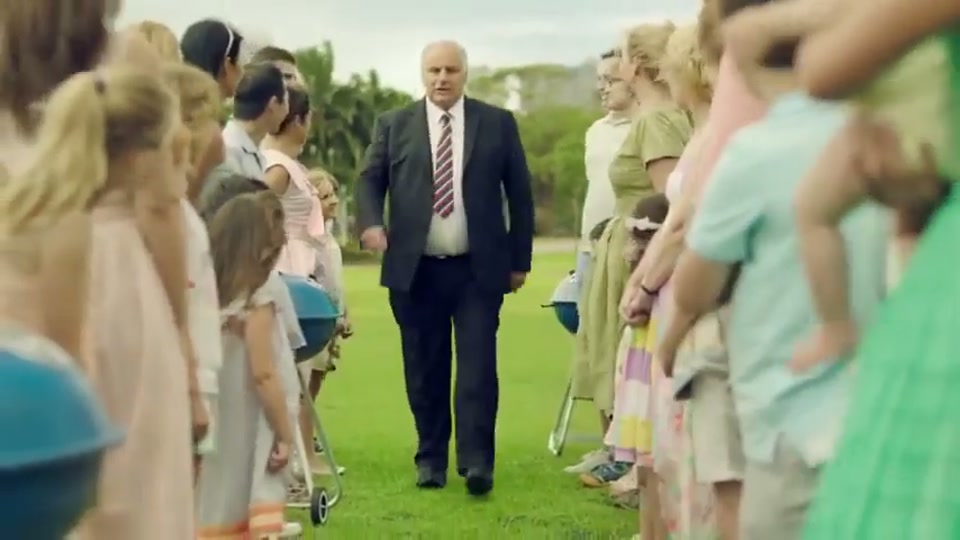
The theme first appears in 2014 “Generation Lamb”, where a semi-retiring Kekovich charges parents with educating the next “Generation Lamb”. Here generational difference is framed as cultural inheritance — a passing of the torch — and the tone is gentle, though the same ad’s bumbling misgendering of a same-sex couple embodies the era’s tension between progressive gesture and traditional instinct.
The theme returns, transformed, in 2024 “The Generation Gap”, where generational stereotyping is literalised as an actual chasm opening in the earth. All four cohorts — Boomers, Gen X, Millennials and Gen Z — are presented as recognisable stereotypes and mocked equally, until the smell of a lamb barbecue stranded on a pillar between them stops the shouting match and begins reconciliation. This is both-sides satire applied to age: the target is mutual blame and stereotyping, not any single generation.
The stance changed between the two ads. In 2014, generational difference is about inheritance; in 2024, it is about mutual blame. The tone is much gentler in 2014. The sources caution that stereotype recognition only stays affectionate if the stereotypes are applied with equivalent affection to every group — giving one generation a fundamentally more negative caricature than the others would break the campaign’s non-partisan commitment.
This target extends the campaign’s belief that political and social division is absurd and solvable through shared ritual, and connects to generational change and the broader move toward an inclusive, non-prescriptive identity.
Advertisements (2)
- 2014 Generation Lamb
- 2024 The Generation Gap